I’ve recently come to learn something about myself. I don't actually enjoy change. I order the same coffee, return to the same places for holidays, and watch the same films on repeat. Predictability feels safe. Familiar. Comforting.
I also know I'm not the only one. The majority of people I've worked with feel the same.
Why? Because change activates multiple psychological systems simultaneously. Loss aversion makes us over weigh what we might give up compared to what we might gain. Status quo bias creates an unconscious preference for things to stay the same. Our threat detection systems evolved to keep us safe from danger, and uncertainty, even positive uncertainty, can trigger these same neural pathways.
But it's not just psychology. Change resistance often stems from entirely rational concerns: Will I still have a job? Will my workload double during the transition? Have I seen this type of initiative fail before? When people resist change, they're not just being stubborn, they may be responding to legitimate risks or drawing on hard-earned experience.
So how does someone like me, someone who values predictability, end up leading change and transformation? Well, I've learnt that successful change is not about pushing past those emotions or dismissing those concerns. It's about working with them.
Effective Change Takes Three Ingredients: Value, Emotion and Creativity
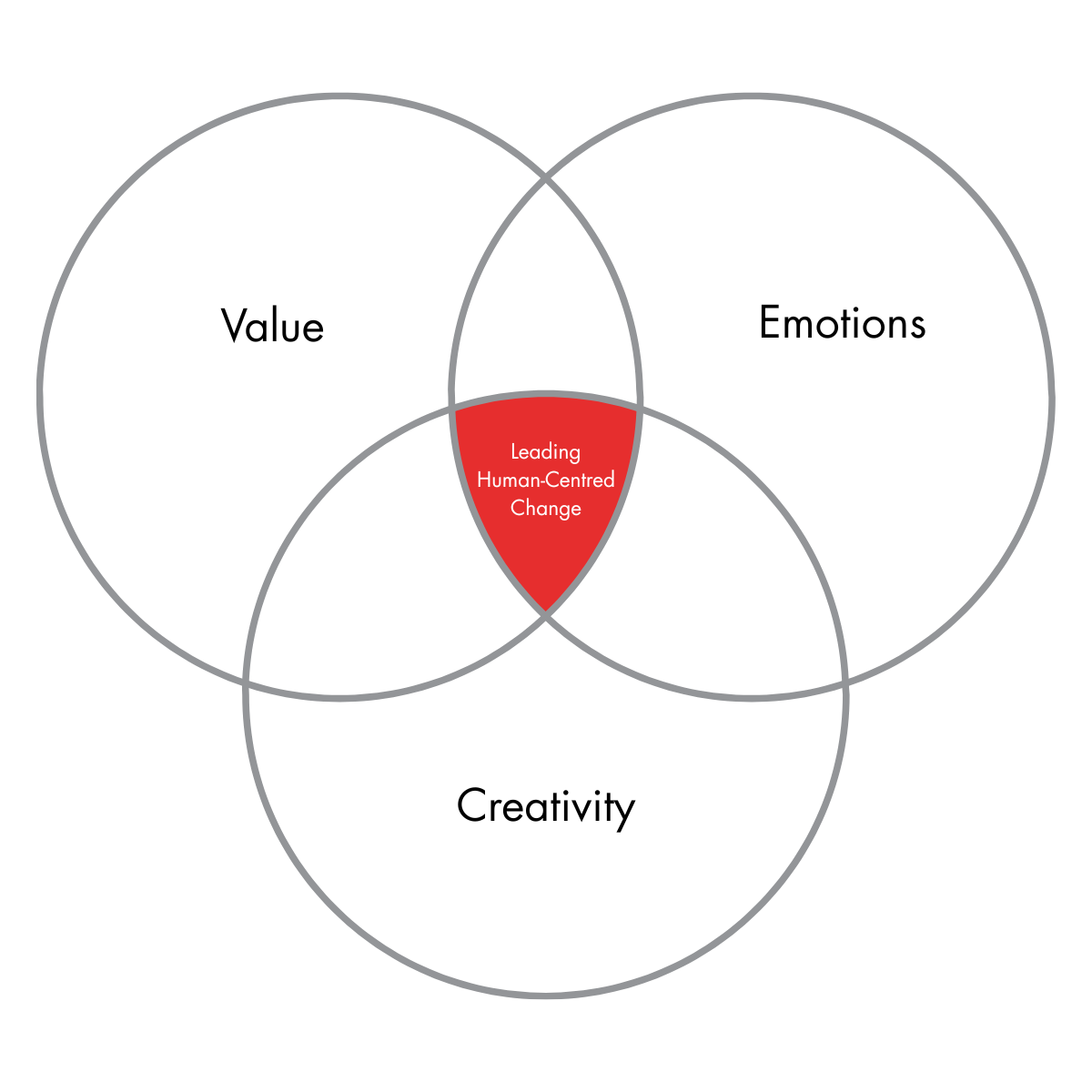
Change that lasts needs both a rational and an emotional pull.
Value (head) makes change rational. It explains why it matters and what the benefits are.
Emotion (heart) makes change human. It acknowledges the fears, hopes, and lived reality.
Creativity (hands and spirit) makes change alive. It invites imagination, agency, and play into the process.
When you focus only on value, you risk sounding logical but cold. When you focus only on emotion, you stir connection but leave people unsure what it's for. Together, value and emotion turn uncertainty into possibility. Creativity acts as the bridge, giving people a way to engage both rationally and emotionally by imagining, experimenting and creating.
Think of creativity as the spark that:
reframes challenges as "what if" questions rather than burdens to endure
provides safe ways to test ideas so fear doesn't block action
sparks pride and ownership because people can see their fingerprints on the future
Making Change Stick: Four Things That Work
1. Start with human reality, not business theory
Change is not lived in boardrooms, it is felt in daily struggles. Notice frustrations. Acknowledge weariness. Honour the small wins that keep people going. Then design change that relieves real pain points. When people can see the value and feel recognised, they move from sceptics to advocates.
2. Invite the emotions in
Your people already carry feelings about change: nervousness, hope, fear, relief. They also carry rational concerns about job security, capacity, and whether leadership will follow through this time. Pretending otherwise drives both emotions and concerns underground, where they fester and sabotage progress.
The leaders I've seen succeed make space for both feelings and questions. They listen with empathy, show their own vulnerability, and let people name what they're experiencing whilst also addressing practical concerns with transparency.
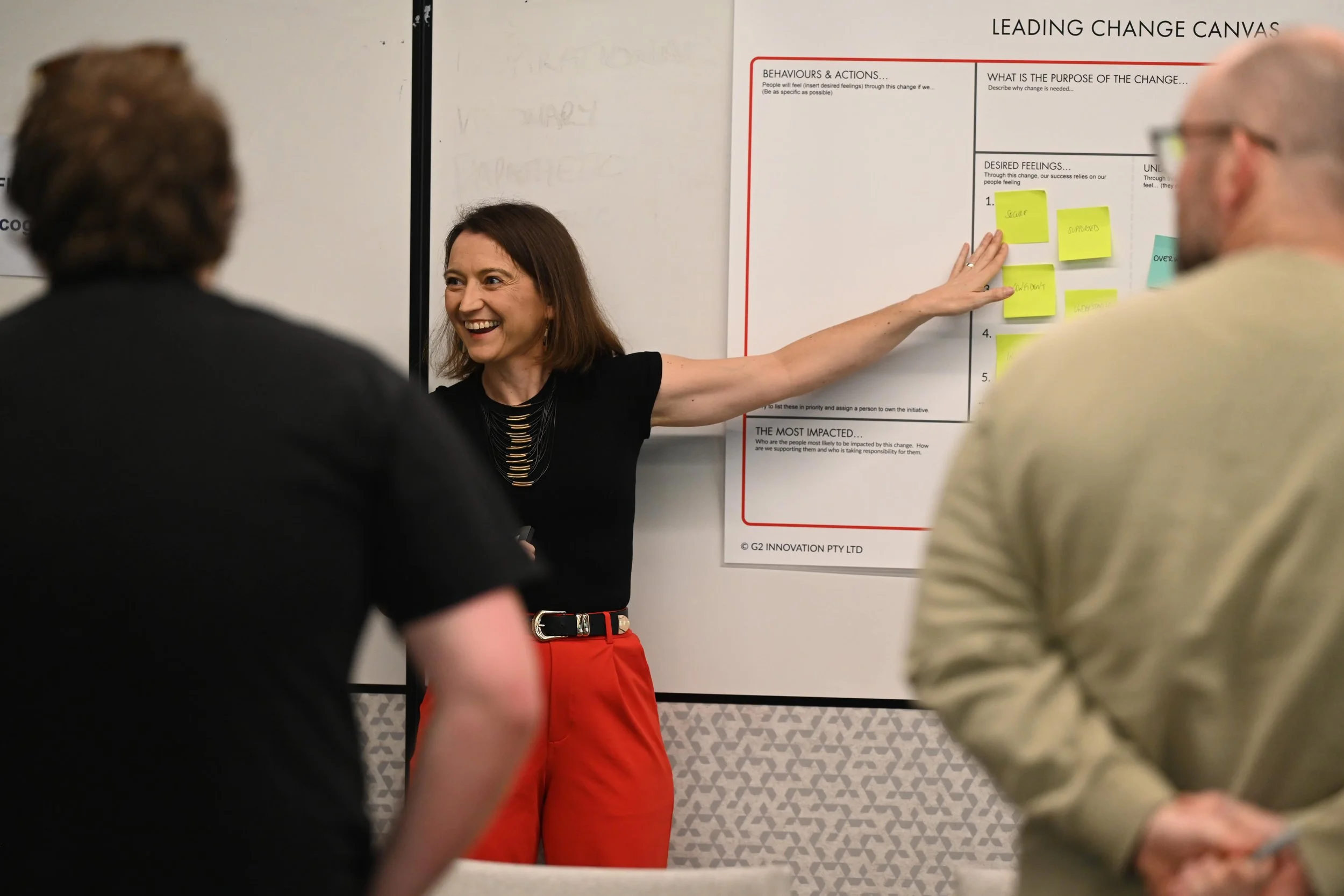
In one project I led with a metropolitan council who were changing their performance development processes, giving space to emotions meant that we learnt what frustrated people about the previous process, and what they wanted to feel using a new programme. As we ran pilots through the organisation, we were consciously looking for these feelings as opposed to more concrete indicators like "did they know where to click" or "did they understand the question." By giving space to emotions, our confidence in what we created grew.
3. Discover, design and develop before you deliver
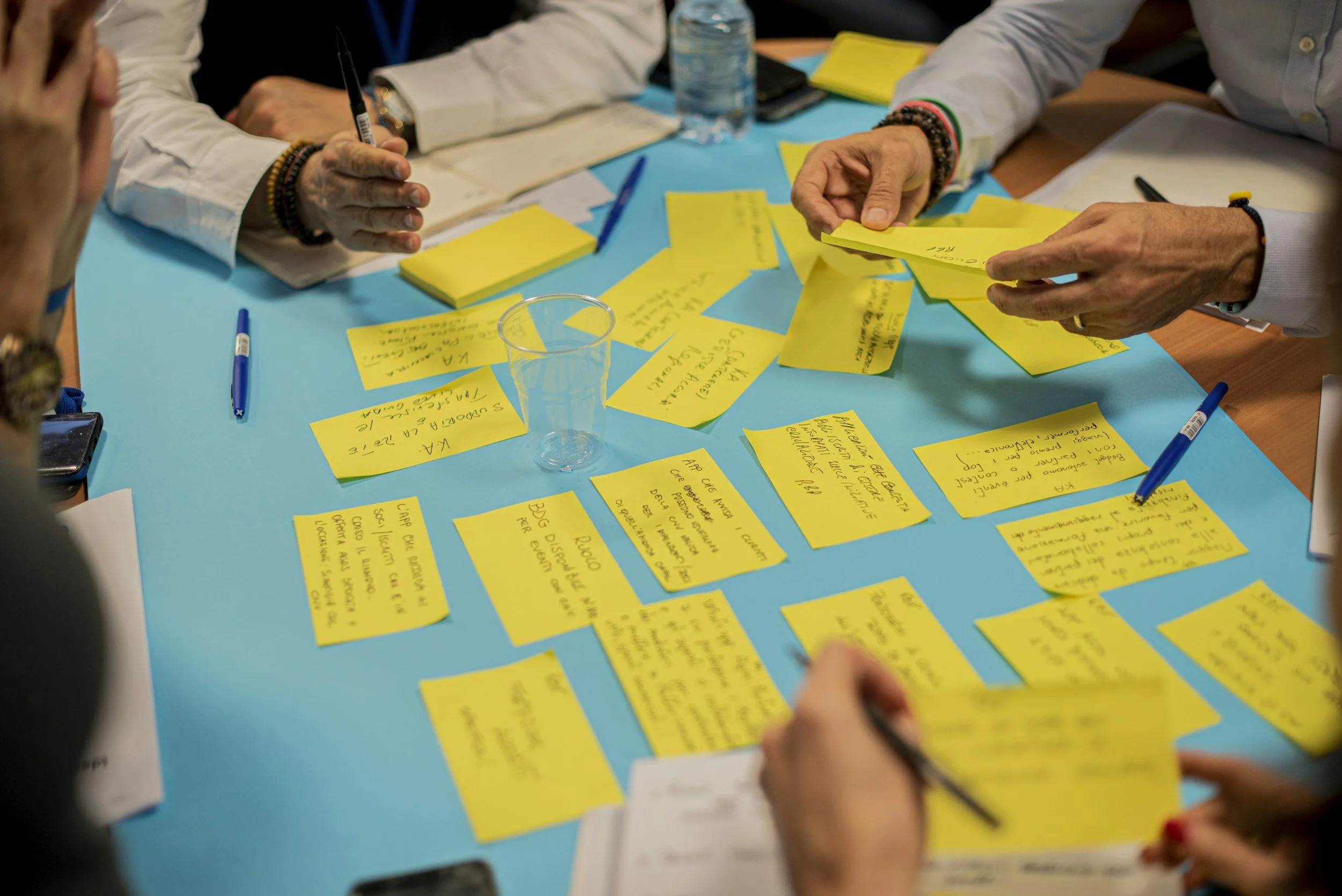
A design-led approach to change offers a framework that weaves value, emotion and creativity together. You discover the needs of people, design for real value, and develop experiments and rituals that support people at the core, rather than starting with the organisation's goals.
In another project with a state government health provider, a problem was identified between tenured staff and newcomers. The discovery phase helped us identify what was going on for both groups and the ways in which they'd prefer to feel. The design phase gave space for their involvement to solve for the problem, and the develop phase allowed us to pilot the ideas, experiment and iterate. All too often, organisations identify a problem and then hand down the solution without really getting to know the people at the heart of the problem, or testing their solution first. The design-led approach is more inclusive, cost-effective and rewarding for all involved.
4. Sequence for safety, not just speed

If you’ve ever been part of a large scale transformation, you’ll know that the roadmap is a key asset. However, if shared upfront in their entirety, roadmaps can overwhelm people, leading to greater resistance. Instead, try sharing the vision and purpose of the change, and a loose plan, then sequence change with emotional impact in mind. For example, start with a pilot program for a team or two, or gently introduce the change. Pacing it like this, ensures that people don't just understand the change, but feel able to cope with it.
I saw this happen beautifully over the course of a year in an animal health business. With our strategic guidance, the CEO announced an intention to embed AI into their ways of working at their annual conference. He then invited feedback and insights. As you can imagine it was met with much hubbub, including active dissent. Over the course of the year, he invited nay-sayers and advocates alike to learn, play and experiment with AI. Then, at the next conference we took it a step further. We employed the help of some of the naysayers (now turned advocates) to share their own experiences, and created a mass experiment, so every leader in the organisation could play with a tool. Following the second conference the uptake in AI usage more than doubled. More importantly, so did their client’s experiences and their profits.
Why This Approach Works
Change initiatives face predictable obstacles: competing priorities stretch people thin, organisational politics create hidden resistance, past failures breed cynicism, leadership turnover kills momentum, and short-term pressure tempts abandonment of long-term efforts.
But here's where value, emotion, and creativity become powerful antidotes:
Value helps cut through competing priorities by making the "why" so clear that people can see how this change serves them, not just the organisation. When the metropolitan council staff understood how the new performance system would reduce their frustration with meaningless paperwork, it became worth their limited time.
Emotion neutralises cynicism from past failures by acknowledging what went wrong before and demonstrating that this time is different. When you create space for people to voice their scepticism and address it directly, you transform cynics into cautious allies.
Creativity overcomes resource constraints through testing and learning rather than big-bang implementations. The animal health CEO didn't need a massive budget, he needed imagination to reframe the conversation. Instead of "AI is coming whether you like it or not," creativity helped people ask: "How else might we use this technology? What opportunities do I see? How might it empower my team?" This turned a potentially threatening announcement into a year-long journey of discovery that people wanted to be part of.
The Paradox of Leading Change
The best leaders of change aren't those who thrive on disruption. They are those who understand its emotional cost and practical challenges, and design transformations worth the risk, effort and stretch.
Transformation is never purely logical. It is emotional and it typically feeds into the culture of an organisation. We are asking people to give up comfort, control and certainty, and to trust us in return; often whilst they're already stretched thin and sceptical from previous experiences.
That is no small ask. It calls for honesty, empathy and respect. It should also invite people to create, to imagine and to play. It requires acknowledging the legitimate obstacles that stand in the way.
When you bring value, emotion and creativity together, whilst being realistic about the challenges, change doesn't just stick. It becomes something people carry forward with pride.
Want to learn more? Our Workshop ‘Leading Human Centred Change’ helps leaders clarify the value, plan for emotions and creatively respond with human-centred approaches.