Frontline staff are often the public face of an organisation, they hear customer concerns, see where systems fail, where processes are cumbersome and when complaints go unaddressed. Some may see opportunities for change and growth, but when there isn’t a process to support ideas, they learn to stay close-lipped, becoming disgruntled and disengaged. Here’s how to capitalise on the ultimate insight to innovation, your frontline.
So, you’ve decided to start an innovation transformation program. You’ve gained commitment from the powers-that-be, you’ve mapped out how the program will run and now you just need to put together your first group of innovation champions.
Competitors.... While we don’t want to follow them, we want to make sure we know exactly where they are, where they are heading, and if some are getting too close, identify gaps so we can stay ahead.
Innovation has become a major factor in determining organisations' longevity and success. That's where an innovation strategy comes into play, it is the where, what, how and who of innovation. Having, knowing and using your innovation strategy puts you at the helm of the boat.
If the skyrocketing success of Uber, Xero, Airbnb or Deliveroo has taught us anything, it’s that user-centric principles can be applied to the service industry as well as product creation. Here are 3 examples of successful user-centric innovation that transformed their organisations.
We (the general population) love wearables - there's no doubt about it, and, whilst they don't show signs of fading out any time soon as a mega trend, there is, however, an exciting concept lurking in the shadows... The next generation of wearables: the 'Internable' - an area of development which is ripe with innovation opportunity and we believe it's only a matter of time before this starts to challenge the mighty wearable for its throne...
Hint: It’s not a fear of Mexican food! Ever felt like the world is moving just that little bit too fast for you? Well, you're not alone...this feeling; fearing the pace of change has actually been given a name: 'Tachophobia'. In this blog, we explore this concept; looking at where, how and why it has been evident throughout innovation history...
The Australian Government's Innovation Statement a.k.a 'The Ideas Boom' has finally been released. Here we discuss what it really means for business and what your business should be doing to make the most of it?
Perhaps you're an employee longing to see your big idea for the Company come to fruition? Or perhaps you're an employer keen to create a culture of enterprise and Innovation in your team? Either way, being able to activate some intrapreneurism is bound to kickstart the process. We've created our six top tips to help you on your way to success.
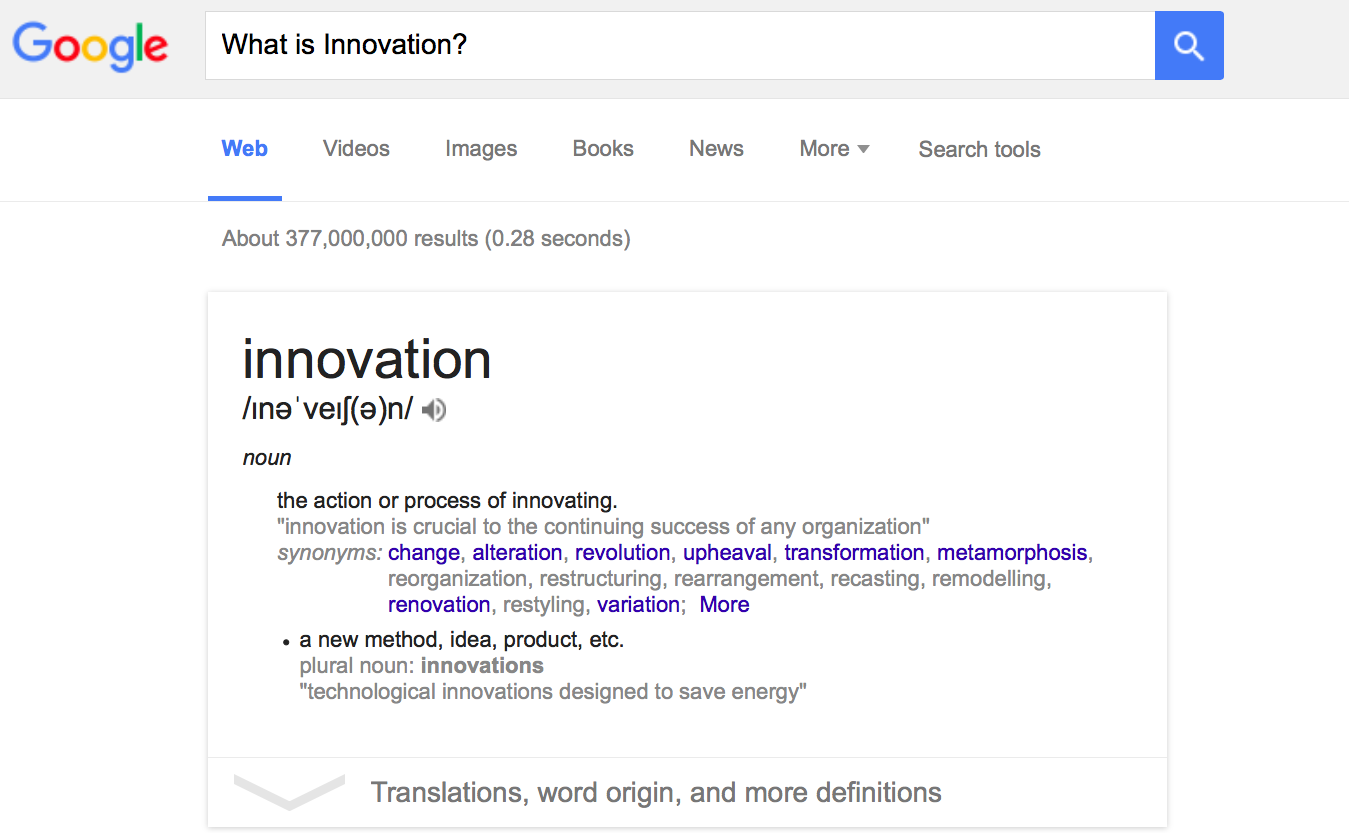
If you’ve ever googled "What is Innovation?” you’ll know that there are more than a million ways to answer that question. Unfortunately, only a handful of these definitions will actually help you achieve the holy grail that is Innovation. Here we outline the best way to define and think about Innovation, specifically for those who want to achieve it.
The speed and rate of change has never been higher. In the history of the human race, we have never had so much access to information, knowledge, customers and new markets as we do today. How businesses look at the ongoing escalation of change and the responses they make are more crucial than ever before...
Nobody said innovation was going to be easy, but it certainly won’t happen if we can’t find the time to dedicate to it!
The reality is that Innovation does not require large amounts of time. In fact we find it can be achieved in 15 minutes… a day!
He'd hate to be wrong but this boy knows nothing about how to hold a good brainstorm...!