I hate change!

I hate change!

I hate change! In fact, I don’t even like change. I holiday at the same place, eat at the same restaurants and often order the same meal. So how does someone with an aversion to change work for a company that promotes, encourages and trains thousands of people to innovate and make … change? Here’s my top 3 tips:

WHEN CO-DESIGN ISN'T CO-DESIGN

WHEN CO-DESIGN ISN'T CO-DESIGN

Co-design enables a range of people to creatively contribute to the solution of a problem. Many organisations create the ‘illusion of co-design’. I worked for one such organisation, here is what happened…

Innovation Strategy: A story of a candle making company

Innovation Strategy: A story of a candle making company

An innovation strategy can be the difference between an organisation that peaks then flounders and an iconic organisation with sustained growth and longevity. To demonstrate, here’s a story of two candle-making companies, one with an innovation strategy and one without.

3 Digital Disruptions and How They're Changing User Expectations

3 Digital Disruptions and How They're Changing User Expectations

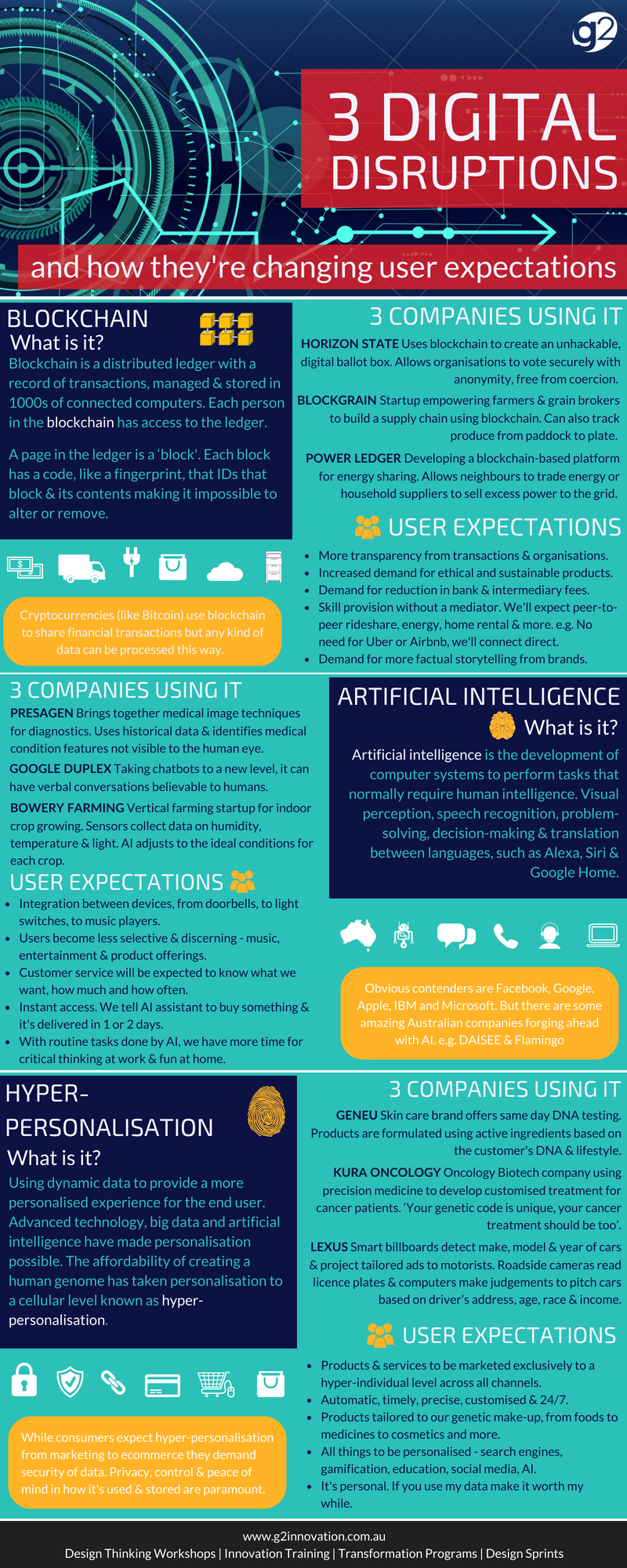
When it comes to digital disruption, it is not a matter of if but when. But that doesn't mean we can expect a Terminator-like armageddon. AI isn't here to take all of our jobs, Blockchain isn't a concept too hard to grasp and hyper-personalisation doesn't mean genetic theft.

These are 3 digital disruptions that we currently face and how they are going to impact the most important person in your business - your end user. 

Click here or on the image to download the Digital Disruption and user expectations infographic

7 Tips: Collaboration for Innovation

7 Tips: Collaboration for Innovation

Collaboration should be a positive experience for all parties and most importantly, for the end users. Whoever you’re collaborating with, the partnership must be win:win and the value at the forefront of even the most preliminary discussion. Here are our tips to consider before a collaboration.

Design Thinking 101 For Marketers

Design Thinking 101 For Marketers

Marketing and Innovation are business’s catch 22. Innovations are rarely discovered to be valuable without effective marketing (or storytelling) and marketing won’t be effective if the product or service doesn’t add value to the customer. The good news is, the Design Thinking framework we apply to innovation, has amazing impact in marketing too. Read on to find out how.

Y2K TO CX: THE FUTURE OF MARKETING

Y2K TO CX: THE FUTURE OF MARKETING

Merryn Olifent spent New Year’s Eve 1999 in the boardroom of Hewlett Packard waiting for the Y2k crisis. Since then, she’s been at the forefront of digital technology and marketing. We asked her to share the most significant changes to marketing.

Design Thinking - Revolutionising Healthcare

Design Thinking - Revolutionising Healthcare

The healthcare focus has shifted from volume to value, but it doesn’t remove existing pressures on an already stretched system. That’s why Design Thinking is the perfect framework to drive healthcare innovation - it thrives on barriers, and restrictions, by using fast, cheap and efficient tools and processes to create impact.

How to Select a Team of Innovation Champions

How to Select a Team of Innovation Champions

So, you’ve decided to start an innovation transformation program. You’ve gained commitment from the powers-that-be, you’ve mapped out how the program will run and now you just need to put together your first group of innovation champions.

Know your marketplace

Know your marketplace

Competitors.... While we don’t want to follow them, we want to make sure we know exactly where they are, where they are heading, and if some are getting too close, identify gaps so we can stay ahead.

THE POWER OF THE PLAN

THE POWER OF THE PLAN

Innovation has become a major factor in determining organisations' longevity and success. That's where an innovation strategy comes into play, it is the where, what, how and who of innovation. Having, knowing and using your innovation strategy puts you at the helm of the boat. 

THE EMPOWERMENT OF THE END-USER

THE EMPOWERMENT OF THE END-USER

Never before have end-users been so empowered. No longer passive observers, end-users are active participants who educate themselves about your products and services long before they engage with your organisation. 

The Power of Purpose

The Power of Purpose

Your purpose is the rudder that keeps your organisation on course. It's your strategic starting point that helps you filter what you shouldn't do and focus on what you should. With a clear purpose you can transcend technologies and prevent disruption, change markets and gain a competitive advantage.

Culture is for Life, Not Just for Christmas

Culture is for Life, Not Just for Christmas

While Christmas parties present a great opportunity to reward employees and celebrate achievements, it does little to improve workplace culture if such things are only expressed once a year. Support your culture so your culture can support innovation. 

How the 'Amazon Effect' will impact every Australian

How the 'Amazon Effect' will impact every Australian

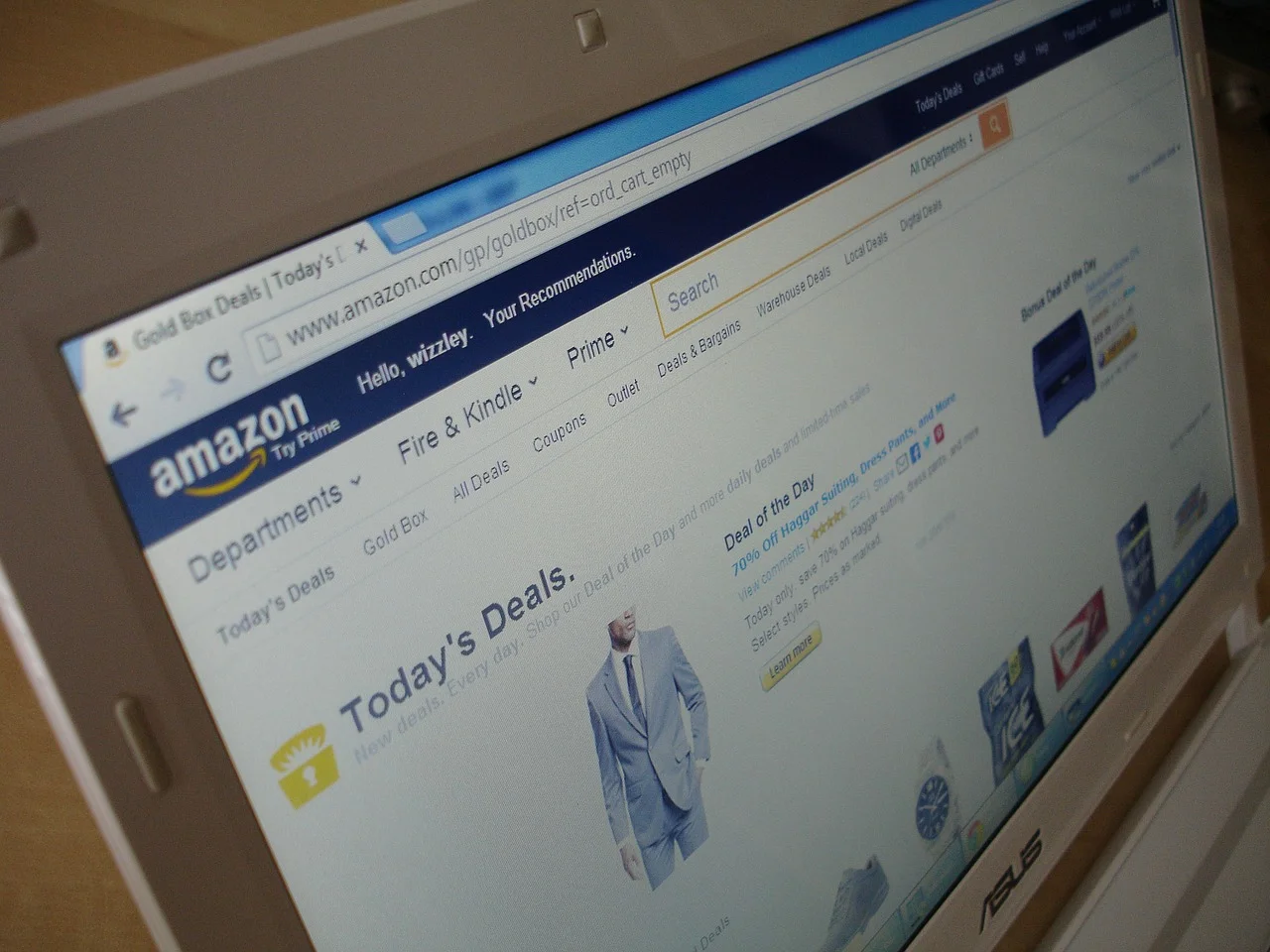
If you work in or own a business, then Amazon will change the life of the people (customers, colleagues, stakeholders) around you. This is because Amazon does a few things very, very well and sooner or later, these people will expect the same from you.

Here are three examples of how the 'Amazon Effect' will have side-effects for every Australian.  

3 Clever Cases of User-Centric Innovation

3 Clever Cases of User-Centric Innovation

If the skyrocketing success of Uber, Xero, Airbnb or Deliveroo has taught us anything, it’s that user-centric principles can be applied to the service industry as well as product creation. Here are 3 examples of successful user-centric innovation that transformed their organisations. 

What is Design Thinking Training?

What is Design Thinking Training?

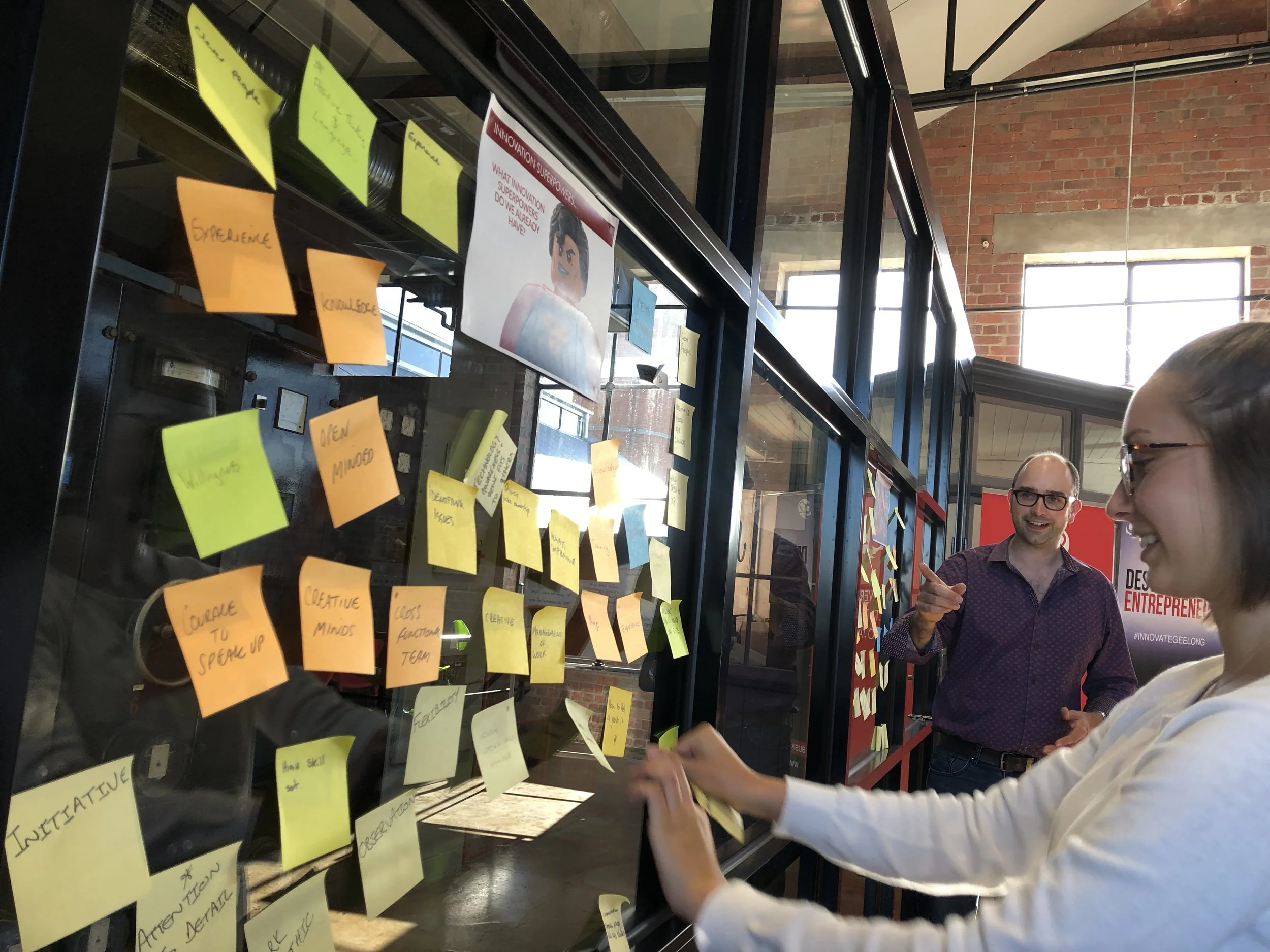
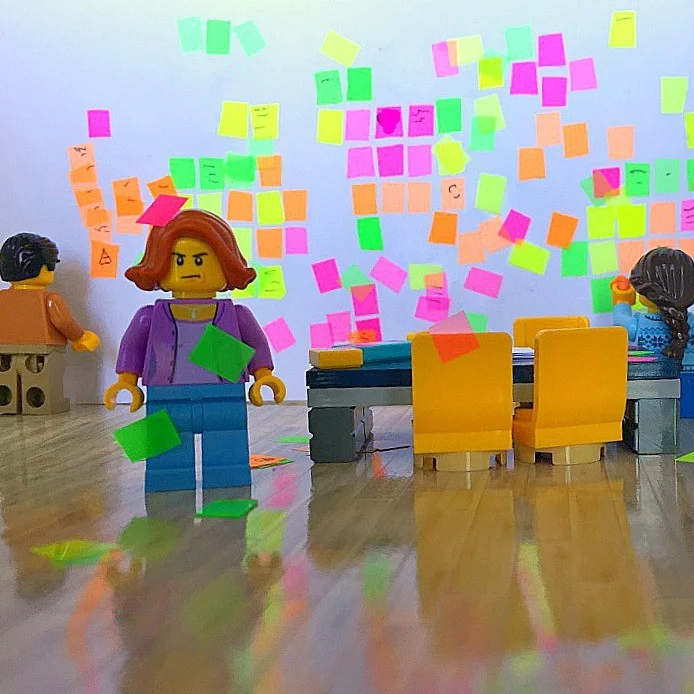
Images of Post-its, Plasticine and Lego have become synonymous with Design Thinking training, but you'd be forgiven for wondering if they are really what this powerful process is about. In this blog we bust some misconceptions and give you a taste of our training workshops.

3 Reasons your Business Needs to Know About Trend Spotting

3 Reasons your Business Needs to Know About Trend Spotting

Th­­e elusive trend. It’s often said that once you react to a trend it’s already too late. 

But how, as a business, do you stay abreast of the trends, and most importantly, how do trends apply to your end-user? 

With the seemingly rapid increase in technology, it is easy to assume that it’s impossible to keep up. But whilst some trends are fleeting fads (eg. fidget-spinners) others have much greater longevity (eg. ethical manufacturing). Regardless of their staying power, what is most important is how they impact your end-user and this is something that can help you decide whether or not to jump on board a particular trend train. 

Here are 3 reasons your business needs to know about trends:

1.     Trends are influencing your customers

E-commerce turned the retail world upside down, pair it with the advancement of mobile phone technology and mobile data enhancements and you have a tech savvy, constantly connected consumer that wants to shop for anything, anywhere, at any time - with fast delivery! 

Where the Baby Boomer showed a certain reluctance to change, for the subsequent generations (in particular the Millennials and Alpha Gens), change is embraced as a part of life. These generations will change jobs or even careers multiple times, they will share cars, jobs and work spaces. They will barely notice technological change because to them it is inevitable and expected.  

These generations are being influenced by trends on a daily basis, but unlike generations of old, they expect their businesses and service providers to keep up with their appetite for change. For them, a lack of change is unforgivable.

By not changing or adapting to what influences customers, a business is putting its longevity at risk.  

2.     Identifying trends helps you to plan for the future

Identifying trends will help you look beyond fleeting fads and plan for the future. First, recognise that there are three types of trends:

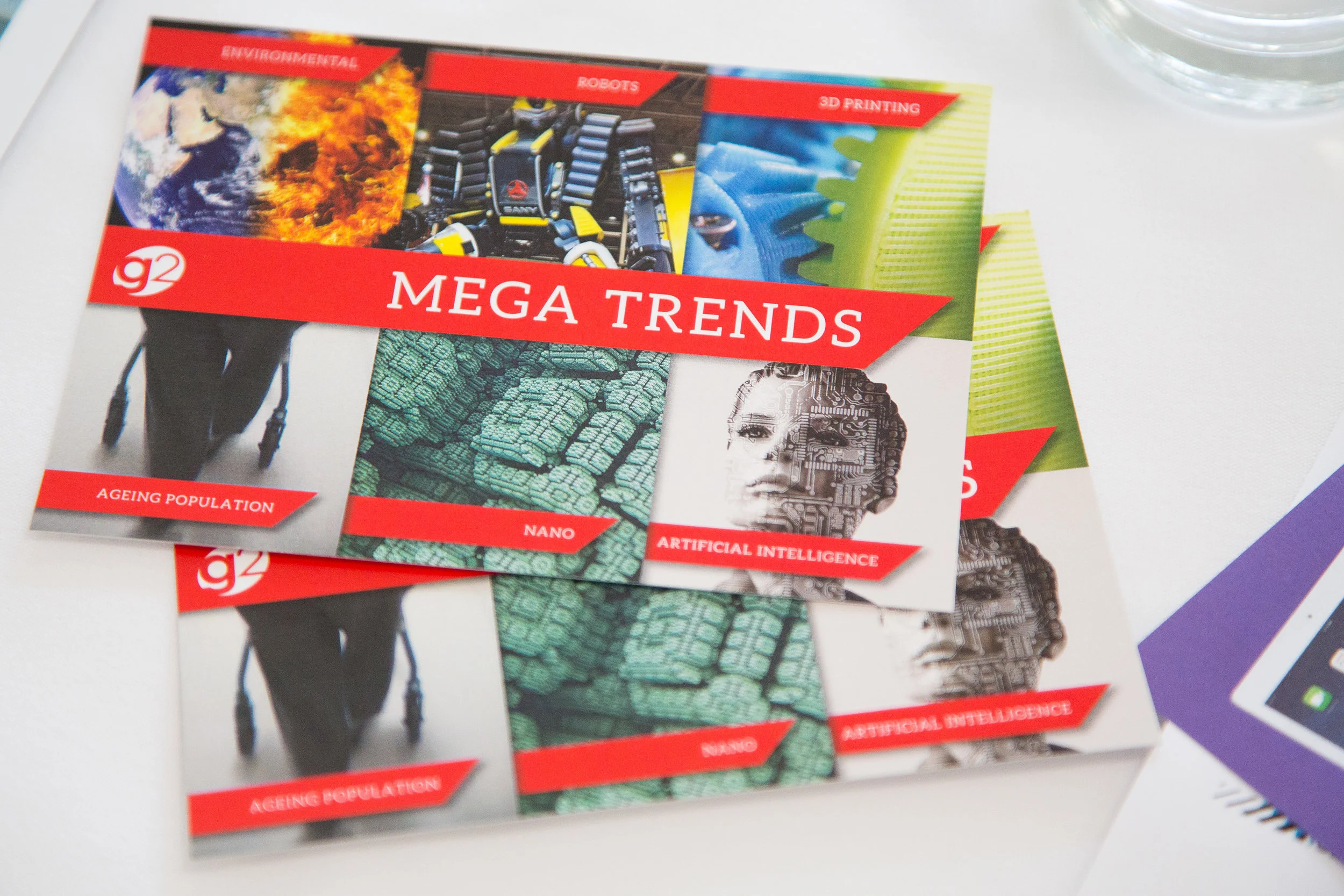
Overarching Mega Trends are enduring. Like climate change, globalisation, and robotics. They can last generations, even centuries.

Consumer trends represent the habits, behaviours, and expectation of consumers. These are driven by mega trends but don’t last as long. Smart phone usage, wearable technology, and the increased desire for well-being are great examples of consumer trends. These drive significant change over a number of years. 

Fads are fast and regionalised with a short life. They are the passing crazes such as wheatgrass, hipster beards or gym ball office chairs that rise and fade quickly.   

Knowing the difference between these types of trends, what the signifiers of their domination are and how to analyse them will inform decision-making, and ensure that your business is always in the middle of the latest developments. It could mean the difference between jumping on a fad just as it fades, or being at forefront of it.

For example, whilst every new social media platform presents possible new opportunities, Snapchat, Instagram and the like are not the influencing trends. The underlying trend is ‘connectedness.’ The more we rely on AI and computer-centred technology, the more we will also crave the human experience. Something that can’t be replaced by technology. 

Humans desire connectedness via our phones and computers 24/7, but with this comes an intense desire to be connected with other human beings and that is the trend that social platforms have cleverly manipulated to their advantage. 

Recognising the underlying influences behind changes in your marketplace allows a proactive rather than reactive approach to trends.

3.     Trends help identify opportunities

If you can see where a trend has come from and where it is heading, you have a much greater capacity to capitalise upon it.  

The rise in internet shopping presents endless examples of companies that identified opportunities in a trend (and indeed those that did not!). 

A great example of this is PayPal. PayPal was originally a software delivery company for PalmPilots. Their founder, Elon Musk, saw that internet shopping was a long-term trend and capitalised on an opportunity to create an auction currency for eBay. In this case, Musk’s awareness of a consumer trend and his ability to act upon it, resulted in the ultimate Return on Investment - a $1.5 billion buy-out by eBay, only 2 years after PayPal’s inception. 

Responsive not reactive to change = success.


Trends are something tangible that we can map, immerse ourselves in and use to better connect with our consumer, so that we can informatively imagine how the future will impact our business and most importantly, what opportunities this future can provide. 

Trends are the windows to the future.

Are your curtains open?


Making Time for Innovation

Making Time for Innovation

We all have the same amount of time as Einstein, the same as Zuckerberg, the same as Elon Musk, the same as our favourite musicians and as our favourite author. Everyone has just 24 hours a day. In this blog we share some tips to make you more like Musk and less like the White Rabbit. 

Member Login
Welcome, (First Name)!

Forgot? Show
Log In
Enter Member Area
My Profile Log Out