
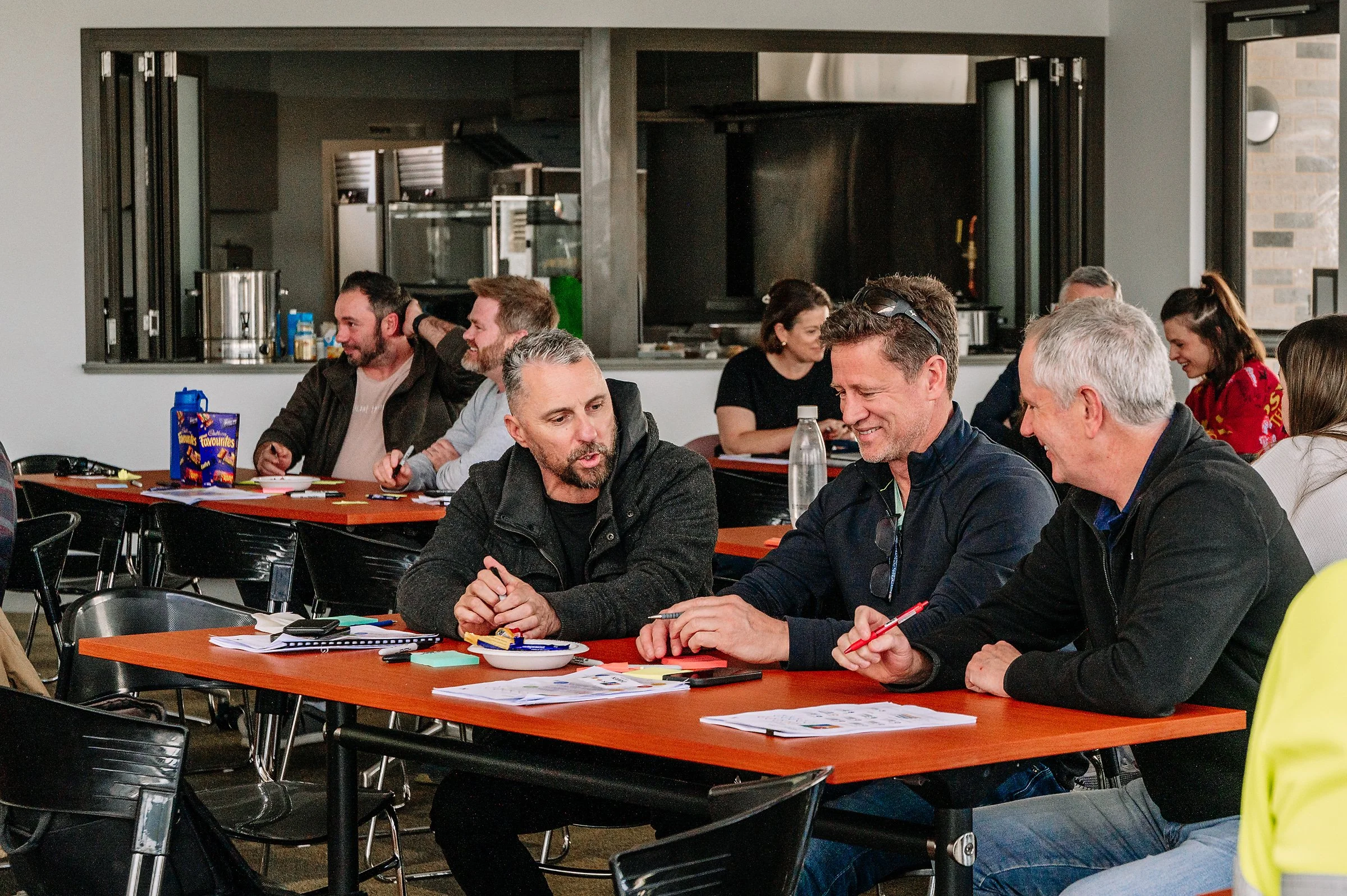
This week we’re in the room with two different organisations, supporting their full leadership teams to set themselves up for success.
Not a strategy. Not an org structure. Not a capability framework.
A set of leadership principles.
It’s interesting work because on the surface it can feel deceptively simple. A group of leaders in a room agreeing the kind of leadership culture they want to create. Words like trust, accountability, collaboration and courage often come quickly.
But the real work sits underneath the words. Otherwise leadership principles would just be slogans, which belittles their value.
They are agreements about behaviour. More importantly, they are the shared understanding of how leadership is practised when things are under pressure, when priorities compete, and when the stakes are high.
Leadership as a practice, not a position
Through this work, we talk a lot about the shift from seeing leadership as a title to seeing it as a practice.
Titles create hierarchy. Principles create consistency.
When leadership is anchored only to role seniority and job descriptions, culture becomes patchy. People experience leadership differently depending on who they report to. Decision making feels inconsistent. Accountability is uneven.
However, when leadership principles are clear, visible, operationalised and measured, they create a common language for how leadership shows up across the whole system.
They become the cultural infrastructure that sits beneath the strategy.
From posters on the wall to behaviours in the room
One of the tensions we name early is the risk of principles becoming posters.
Most organisations already have values. Many have leadership frameworks. Some have beautifully designed charters that live on intranets or office walls.
But if people cannot see the principles in meetings, in decision making, in how conflict is handled, or in how feedback is given, they quickly lose meaning.
So in the workshops we like to move beyond wordsmithing and focus on intent and outcomes.
We ask questions like:
How would this principle apply for someone managing up?
Would this still apply in a crisis?
How would this look when you don't have the answers?
This way the conversation shifts from aspiration to application, especially when things are messy.
Principles only matter when people know how to action them.
The system, not just the self
Another important shift in these sessions is moving leaders beyond self-reflection alone.
Principles invite a broader lens.
They ask leaders to think about:
The team environment they are co-creating.
The organisational systems they reinforce or challenge.
The future culture they are shaping through today’s behaviour.
It moves leadership from personal effectiveness to collective responsibility. Shifting from the tasks I'm here to do, to the purpose I'm part of creating.
Why this work matters now
Organisations are operating in extraordinary complexity. Customer and stakeholder expectations are rising. Resources are constrained. Scrutiny is high. The pace of change continues to accelerate.
In that environment, leaders need anchors.
Clear, practical principles act as decision filters. They help leaders know how to act when policies do not cover the situation. They create alignment when pressure could easily fragment it.
They also create permission.
Permission to speak up. Permission to challenge constructively. Permission to hold each other accountable to the culture they said they wanted.
The real measure of success
By the end of these workshops, our clients walk away with a charter. A set of principles written in their language, grounded in their context.
But we are always clear that the document is not the outcome.
The outcome is what happens next.
Do leaders reference the principles in meetings? Do they use them in performance conversations? Do they call each other back to them when behaviour drifts?
That is when principles move from words to ways of working. This is where shifts happen.