Somehow, we've found ourselves in the middle of November. The Christmas movies have hit Netflix, we're all weighing in on whether John Lewis or Waitrose has delivered the best Christmas ad (trust us, even the Aussies are getting in on this one) and if someone asks us how we are, there's a 99.9% chance we'll tell them we're busy.
Of course, Christmas is a particularly frenetic time of year. Depending on your business, you're either ramping up for the silly season or winding down for the summer break - either way, there's lots to be done. Then, on top of all that, there are the additional activities that family life brings at this time of year.
Yet the reality is, if someone asks you how you are in April, there's probably a 98% chance you'll still say busy.
It's almost as if we've turned busyness into an emotion. We're no longer feeling confident, happy, sad or peaceful. We're busy.
We've also made it something to be proud of. We wear our packed calendars like badges of honour, quietly judge those who seem to have time on their hands and feel a strange sense of guilt when we're not doing something productive. Somewhere along the way, we've confused being busy with being valuable.
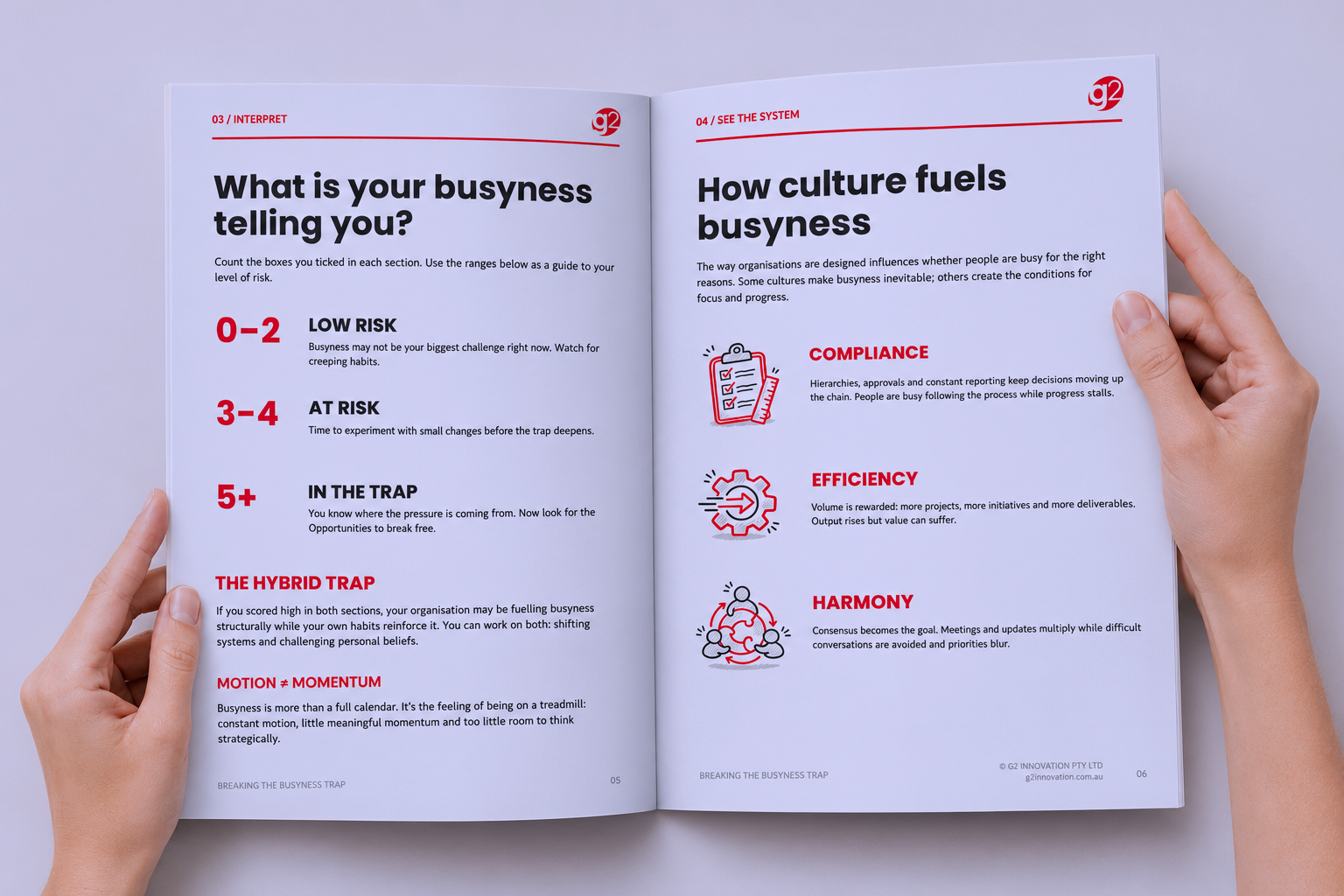
While it would be lovely to point the finger at someone or something for this epidemic of busyness, the truth is there are two dominant causes. Unfortunately, one of them is you.
Let's start with the other one. The system.
Most organisations are extraordinarily good at creating work but far less good at deciding what work to stop.
New priorities are added without old ones being removed. Meetings multiply. Processes designed to create efficiency become increasingly cumbersome. Layers of approvals, reporting and governance are introduced to manage risk, often creating more work than the risks they're intended to address.
Then there are the cultural expectations. The unspoken rules that tell us responsiveness equals commitment; a full calendar equals importance and the person who stays late is somehow more dedicated than the person who finishes on time.
Leaders frequently tell their people to prioritise, focus and work smarter, while continuing to reward the very behaviours that keep everyone busy.
The irony is that much of this activity is created with good intentions. We want people to be informed, decisions to be considered, risks to be managed and customers to be happy. Yet when these intentions accumulate without anyone stepping back to question them, we create systems that consume the very capacity we need to deliver great work.
As you no doubt feel, when everyone is operating at capacity, there's precious little room for curiosity, experimentation, collaboration or innovation. We become so focused on getting through the work that we stop questioning whether it's the right work in the first place.
Now for the uncomfortable bit. You.
As tempting as it is to blame the organisation, our leaders, customers or colleagues, we're often willing participants in our own busyness.
We say yes when we should say no. We attend meetings where we add little value. We hold onto work that could be delegated because it's quicker to do it ourselves, or because we secretly quite like being the person everyone relies on.
When we have a spare minute, rather than spend it thinking, we check our emails. We jump in to solve problems before giving someone else the opportunity. We confuse urgency with importance and convince ourselves that once we get through this particularly busy period, things will settle down.
Except they rarely do.
Sometimes busyness also serves a psychological purpose. It can make us feel needed, competent and successful. It can provide a convenient excuse for avoiding difficult decisions, uncomfortable conversations or the possibility that we might try something new and fail.
Being busy can feel safer than being effective, particularly when effectiveness requires us to make choices, disappoint people or challenge the way things have always been done.
Of course, none of this means we're lazy, incapable or deliberately making life difficult for ourselves. Many of these habits have been learned and reinforced over years, often by the very systems we've just described.
Which is why solving busyness requires us to tackle both.
So, what's actually making you so busy?
As we approach the end of another year, there's a good chance you're already thinking about what you want to achieve in 2027. New goals, new priorities, new opportunities. More things to add to that already overflowing plate.
Before you do, we'd encourage you to get curious about what's driving your busyness in the first place.
How much of it is created by the systems, processes and expectations around you? How much is driven by your own habits, assumptions and choices? And perhaps most importantly, how are the two reinforcing each other?
Because until you understand what's creating the busyness, there's a good chance you'll keep trying to solve it by becoming more efficient at being busy.
We've created a free guide, Breaking the Busyness Trap: How Leaders Create Space for Impact and Innovation, to help you diagnose the causes of busyness in your organisation and identify practical ways to address them.