
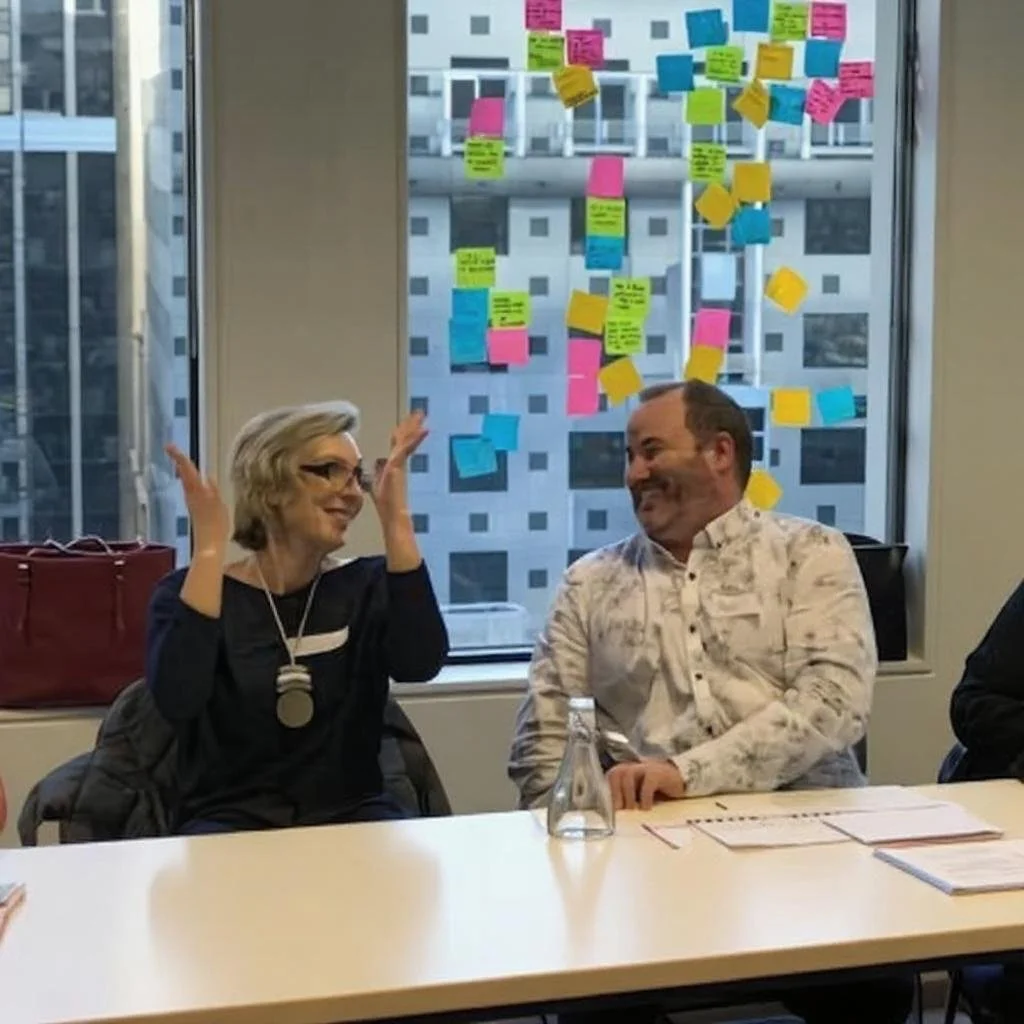
Creating a Culture of Innovation: It’s Not Just About Ideas
Creativity in the workplace can be a tricky thing to pin down.
It rarely shows up on demand just because someone has booked a meeting room, handed out sticky notes and written “brainstorm” at the top of a whiteboard.
It also doesn’t come from beanbags, lava lamps or telling people to “think outside the box.”
Creativity is much more likely to emerge when people feel safe enough to contribute, clear enough to focus, and energised enough to explore. It needs freedom, but not a free-for-all. It needs structure, but not so much structure that people stop taking risks. It needs space to wander, and enough direction to make the wandering worthwhile.
That might sound like a contradiction, but most good innovation lives in that tension.
Too little structure and ideas float around without landing anywhere useful. Too much structure and people stop offering anything that feels unfinished or uncertain. Too much pressure and imagination shuts down. Too little urgency and nothing moves.
A culture of innovation is not about hoping creative people will magically produce brilliant ideas. It is about deliberately creating the conditions where curiosity, experimentation and learning can become part of everyday work.
So, what does that actually take?
Start with purpose
Innovation needs somewhere to point.
A clear purpose helps people understand what they are contributing to and why it matters. When people feel connected to something bigger than their task list, they are more likely to notice opportunities, challenge assumptions and care enough to improve what already exists.
This is where leadership really matters.
Purpose cannot just sit on a wall, a website or a strategy deck. Leaders need to keep bringing it into the room. They need to help people connect the work in front of them with the impact they are trying to create.
When people understand the purpose, they can make better decisions. They can see which ideas are worth pursuing and which are simply interesting distractions.
Innovation does not need everyone running in different creative directions. It needs people moving with enough shared clarity to explore well.
Pay attention to the emotional climate
If we want innovation, we need to pay attention to emotion.
People do not usually do their best creative thinking when they feel embarrassed, dismissed, anxious or afraid of getting it wrong. They are much more likely to contribute when they feel curious, respected, energised, trusted and appropriately challenged.
This is where emotional intelligence in leadership becomes important.
Leaders shape the emotional tone of a team more than they often realise. A raised eyebrow, a dismissive comment, a rushed response or a tendency to reward only polished answers can quickly teach people to keep their ideas to themselves.
The opposite is also true. Leaders who listen well, ask good questions and respond with curiosity create a very different environment. They make it safer for people to share early thinking, half-formed ideas and useful concerns.
That does not mean trying to make everyone comfortable all the time. Innovation often involves uncertainty, disagreement and discomfort. The goal is not to remove those feelings. It is to create enough trust and steadiness that people can move through them without shutting down.
A strong innovation culture makes space for emotions like curiosity, confidence, courage, hope and shared ownership. Those emotions do not happen by accident. They are shaped by how leaders communicate, respond, decide and behave.
Create openness, not just communication
Openness has always mattered to innovation, but it is about more than sharing information.
It is about creating an environment where people can ask questions, challenge assumptions and make sense of what is happening around them.
When people do not know what is going on, they fill in the gaps. Speculation grows. Silos deepen. Trust erodes. Energy gets redirected away from the work and into trying to interpret what leaders really mean.
Openness does not mean leaders need to share every confidential detail. It means being thoughtful about what people need to know in order to contribute well.
It also means being open to what is coming back the other way.
Some of the best ideas in an organisation come from the people closest to the customer, the process, the friction or the opportunity. If those voices are not heard, innovation becomes something leaders talk about rather than something the organisation is actually capable of doing.
Build rituals that keep innovation alive
Innovation cannot rely on occasional bursts of energy.
A big workshop, hackathon or strategy day can be useful, but it will not create a culture of innovation on its own. Culture is held in place by what is repeated.
This is where rituals matter.
Rituals are the recurring gatherings, habits and practices that show people what the organisation values. They create rhythm. They keep the work visible. They help people learn together rather than disappear back into business as usual.
A stand-up can help a team track progress, remove blockers and maintain momentum.
A pre-mortem can help people surface risks before they become expensive mistakes.
A retrospective can help a team learn from what happened rather than rush straight into the next thing.
A regular customer insight session can reconnect people with real needs, rather than internal assumptions.
A simple monthly “what are we learning?” conversation can keep curiosity alive.
The specific ritual matters less than the intention behind it. Good rituals make innovation visible, discussable and repeatable. They remind people that innovation is not a side project or a one-off event. It is part of how the organisation thinks, learns and adapts.
Make innovation sustainable
Innovation is not only about the next big idea.
In fact, if an organisation only values radical innovation, it can accidentally dismiss the smaller improvements that make a meaningful difference to customers, employees and performance.
A sustainable approach recognises that ideas come in different shapes and sizes. Some are incremental improvements to what already exists. Some extend the organisation into adjacent spaces. Some are more radical shifts that involve greater uncertainty and risk.
The balance will depend on the organisation, its context and its appetite for change. The important thing is that people understand what kind of innovation is needed and where energy should be directed.
Without this clarity, teams can become frustrated. One person is trying to improve a current process, another is pitching a completely new business model, and another is wondering whether any of it will ever be funded.
A good innovation strategy helps people understand the playing field. It gives creativity somewhere useful to go.
Learn from failure without making it personal
You cannot build a culture of innovation if failure is treated as shameful.
That does not mean celebrating sloppy work, avoidable mistakes or poor judgement. It means recognising that experimentation involves learning, and learning often involves discovering what does not work.
The leadership question is not simply, “Did this succeed or fail?”
It is also:
What did we learn?
What assumptions were tested?
What surprised us?
What would we do differently next time?
What should we stop, start or adapt?
Failure becomes dangerous when it is hidden, personalised or punished. It becomes useful when it is examined with honesty and care.
This is another place where rituals help. Retrospectives, after-action reviews and learning reviews give teams a structured way to talk about what happened without turning the conversation into blame.
When people know they can learn in public without being humiliated, they are more likely to take thoughtful risks.
Keep some energy in the system
There is still a place for fun in innovation.
Not forced fun. Not gimmicks. Not “mandatory creativity” dressed up as culture.
Real creative energy often comes from playfulness, curiosity and the permission to think differently. It can be sparked through a challenge, a prototype, a customer story, a provocation, a competition or simply the chance to work with people outside your usual orbit.
The key is to make sure the energy goes somewhere.
People quickly become cynical when they are asked to generate ideas that are never revisited, tested or taken seriously. A culture of innovation needs both imagination and follow-through.
Invite the ideas. Make the process engaging. Then show people what happens next.
That is how trust builds. That is how momentum builds. That is how innovation becomes more than an occasional event.
Final thought
A culture of innovation is not created by asking people to be more creative.
It is created by leaders who understand the conditions people need in order to contribute, and who put the right structures, rituals and rhythms around the work.
Purpose gives innovation direction. Emotional intelligence creates the climate. Openness invites contribution. Rituals keep the work alive. Strategy focuses the effort. Learning turns failure into progress. Energy keeps people engaged.
Innovation is not a mysterious spark that appears when the stars align. It is a leadership practice, a cultural rhythm and a disciplined way of helping people imagine, test, learn and move forward together.