
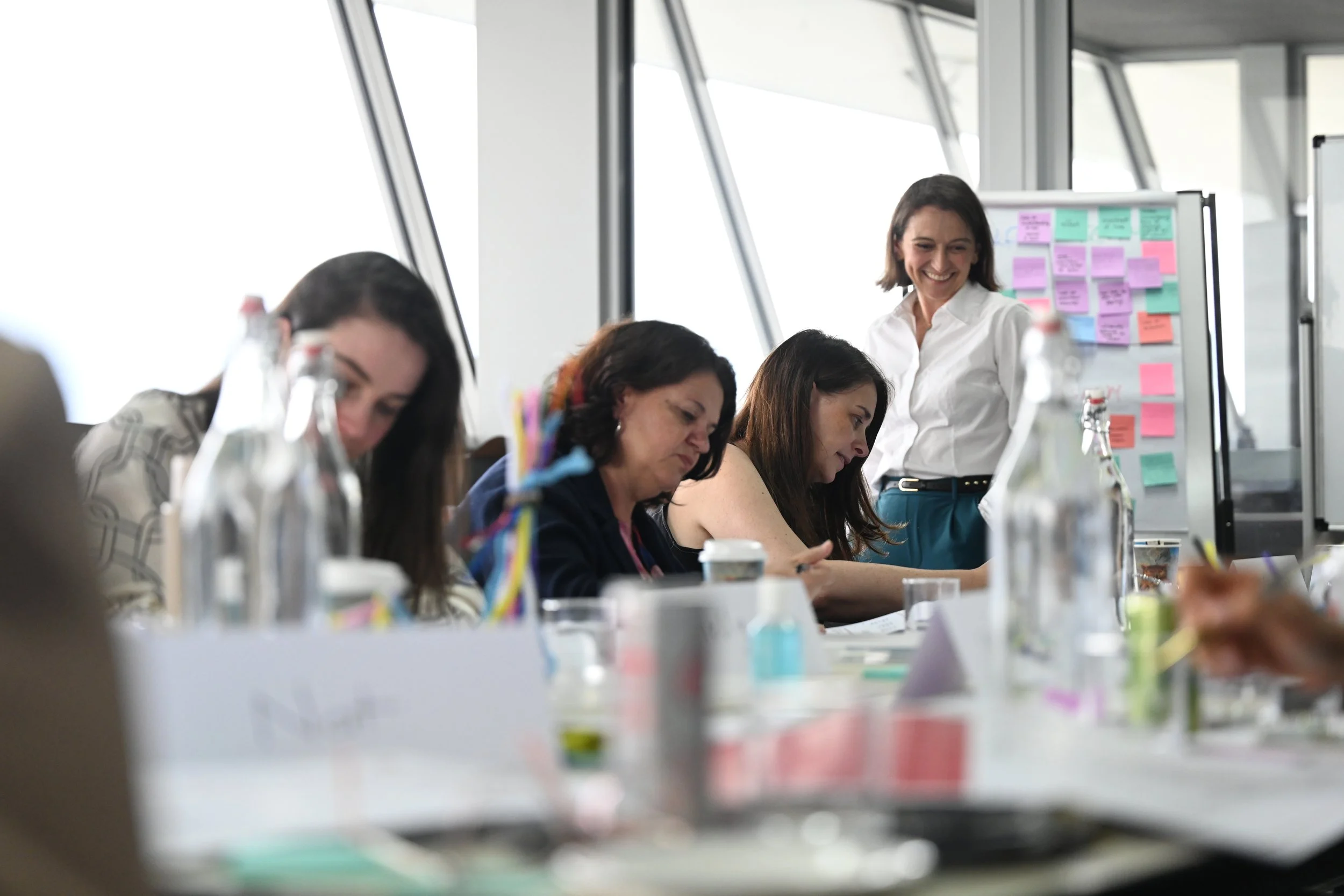
Over the past couple of weeks we’ve been doing a lot of work with leadership teams around building their capacity to deal with complexity and change.
It reminds us that development is often misunderstood.
We tend to think of development as training. Someone goes on a course, learns a new skill and comes back better equipped. Training absolutely has value, and organisations that cut training budgets often save money in the short term while losing far more through disengagement, poor retention, weaker capability and stalled growth.
The bigger issue is what happens beyond training.
Growth happens in the practice. It happens when someone has to use a new skill under pressure, make a decision without enough information, navigate competing priorities or deal with a situation where there simply isn’t a clear answer.
That is where complexity becomes developmental.
Robert Kegan’s work on adult development helps explain why. He describes how many adults operate within a Socialised Mind, where much of our thinking is shaped by the expectations, values and norms around us, and where staying within those familiar frameworks can feel safer. The next developmental stage, if we can reach it, takes us towards a more Self-Authoring Mind, where we become increasingly able to form our own judgement, make sense of situations for ourselves and, when necessary, go against the prevailing norms.
You don’t make that shift by learning more theory.
You make it through experiences that stretch the way you currently think and operate.
Complexity creates those experiences because there is no manual, expert or easy answer to fall back on. You have to stay curious, tolerate ambiguity, make decisions, adapt and work your way through.
That can be uncomfortable, which is where leaders have an important role to play.
Too little support and people can become overwhelmed. Too much support and they never get the chance to discover what they are capable of.
The job of the leader is to hold that tension.
When someone is struggling, holding the tension might mean coaching them rather than solving the problem.
What part feels difficult?
What do you already know?
What have you tried?
What can you do next?
What support do you need from me?
The temptation to rescue can be strong, particularly for leaders who care deeply about their people. Seeing someone frustrated is uncomfortable. Taking over can feel helpful, efficient and the nice thing to do.
It can also rob them of the very experience that helps build their capacity.
Over time, working through these moments helps people trust their own judgement, become less dependent on certainty and feel less threatened by change.
Perhaps that is one of the biggest challenges in developing others.
Can you care enough to support someone, while still allowing them to struggle a little?
Can you hold the tension long enough for them to grow?
That’s what we’re helping leaders and teams to create: environments where people are supported to stay at the edge a little longer, think for themselves and gradually build the capacity to navigate greater complexity.
If that’s something your leaders or teams are grappling with, we’d be happy to talk about what developing that capacity could look like in practice.