

Customer-centricity is fundamental to the success of any organisation. Many organisations are transforming their ways of working to be more customer-centric, but for people working in non-customer facing and internal functions of the organisation this can be challenging. For teams such as Procurement, Finance, Audit and Compliance the customer can feel far removed from their work, and internal requirements can overshadow the greater purpose.
The Procurement and Systems team of our client, a major healthcare provider faced just this challenge. Here’s how we helped them overcome it.
Their Story
The procurement and systems team of a major healthcare provider, felt a disconnection between their work and the patient experience. Their function centred around purchasing equipment, providing funding and monitoring system performance. Internal priorities were typically around quality, cost, and timeliness of delivery, and both individual and team performance were measured by this output.
However, quality, cost and delivery were priorities of previous industrial revolutions, when productivity was key. The cyber-physical revolution we are in favours human, experiential priorities, so organisations that connect with and improve experiences on a human-level are more successful. We brought this compelling argument to life through visual storytelling and activities which explored the impact mega trends are having on societal expectations.
Once agreed on the need for change, the most important step was to identify the team’s purpose and connect it to patients. They needed to understand why they exist for patients. By understanding and believing in their ‘Why?’ the team could collaborate with common understanding and projects wouldn’t be railroaded by functional requirements ahead of patient needs.
But even with a robust purpose, it was the team’s key stakeholders (clinicians and surgery groups) who had direct influence over patient experiences, not them. Faced with this barrier, they discovered their opportunity. To empower their stakeholders to be more patient-centric and support them to deliver an impactful experience.
Embedding this approach involved a radical mindset shift from provider to influencer. It also involved capability uplift. We embedded Design Thinking skills, so they could dig deeply into challenges to identify the root causes, ask laser-like, patient-centred questions of their stakeholders, use empathy in their approach and gather data to influence behavioural change.
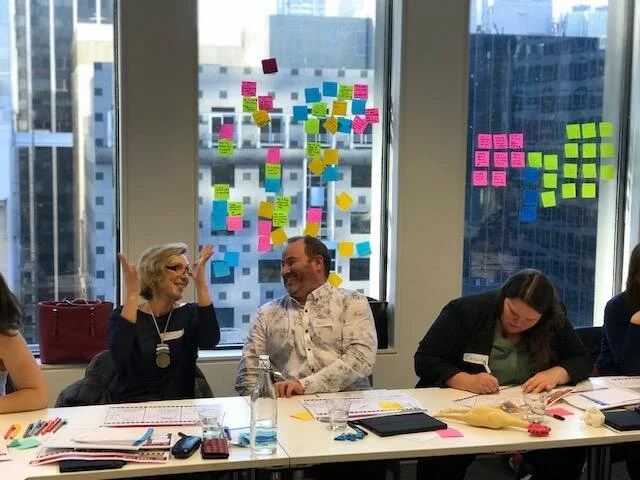
“Design Thinking is a mindset, skillset and toolset that puts the customer at the centre of problems and designs solutions to meet their needs. ”
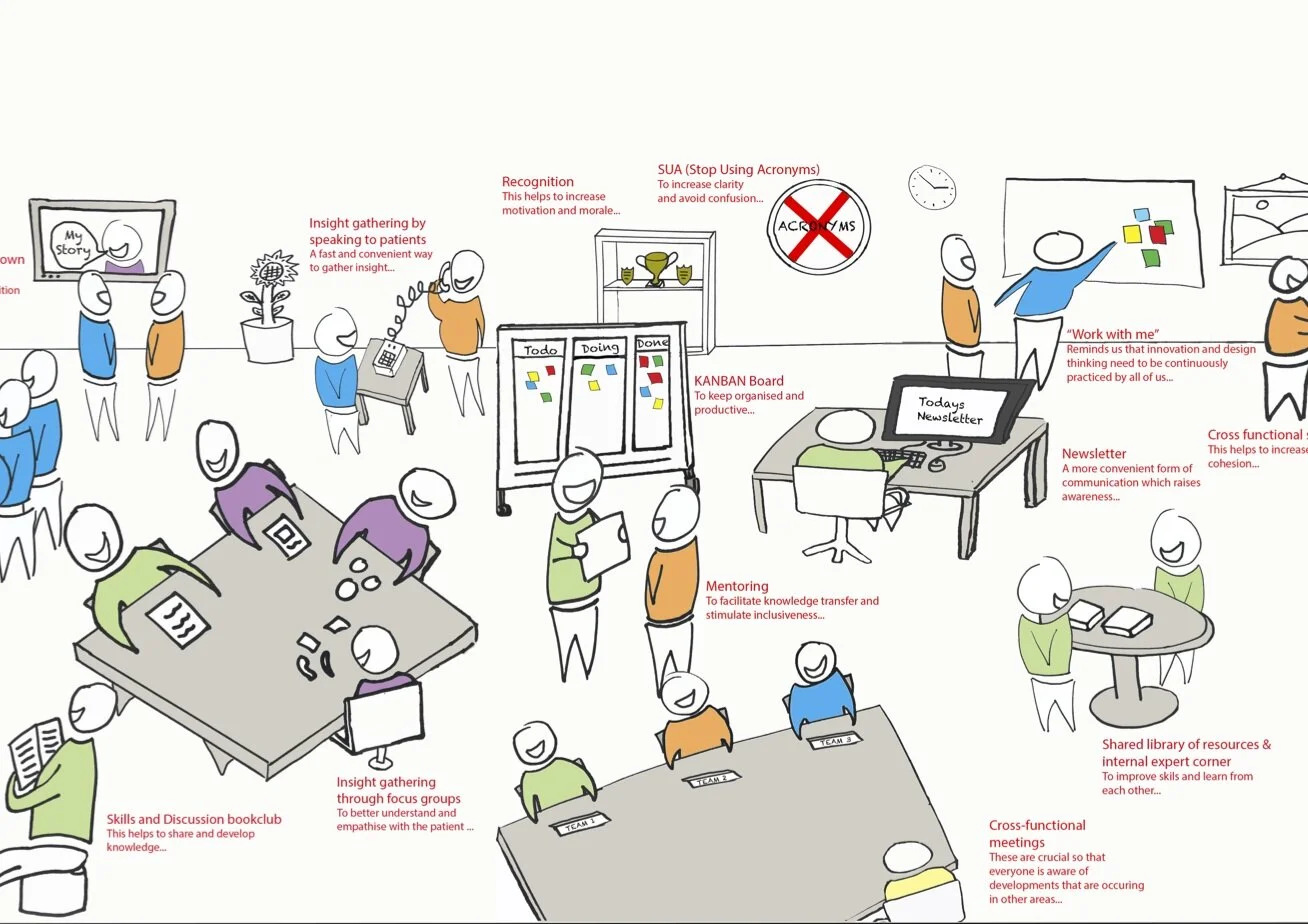
Internally, the team also shifted to more collaborative, creative and transparent ways of working. They created cross-functional project teams to progress ideas, put visual boards up around the office so that these projects could be seen, commented on and improved by others, and applied Design Thinking tools to create an employee experience with less silos, greater engagement and better communication. All with a central purpose of providing high-value to patients.
The result
The team is more purpose-led, engaged, connected, customer-centric and collaborative than ever before.
They’ve shifted their mindset from provider to influencer.
They are using a range human-centred design tools to keep patients’ needs front of mind and are also using these tools to develop a better employee experience.
They’ve developed a strategy for their ongoing development, led by their purpose and vision for consistent patient-centricity.
G2 Innovation have been awarded a silver medal at the LearnX Awards and a finalist nomination for Best Talent Development Program at the AITD Awards.
The take-away
Customers should be at the centre of every team’s work, but it’s often only teams such as customer service, products, marketing and communications, that genuinely see the customer as crucial to success. The reality is, even those far removed from the customer need to challenge their old ways of working, systems and processes to enable real customer-centricity and organisational growth.
If you’d like to learn more about implementing new ways of working and greater customer-centricity in your teams, contact G2 Innovation via the form below.