When it comes to innovating, siloes are one of the biggest challenges for organisations. While it makes sense for distinct functions to work autonomously, problems occur when lack of transparency and communication means teams work at odds with one another or implement new projects without considering the impact on other teams. To get new ideas across the line, effective collaboration is vital.
One way to break down these siloes is by holding cross-functional meetings. But Ugh! Doesn’t everyone hate meetings?
Without a strategy for holding effective meetings, cross collaboration and innovation becomes slow, tedious or halts all together.
That’s why we’ve collated a few of our favourite ways to run effective meetings.
1. The Boomerang or the Stick
After feeling overwhelmed by the sea of meetings in his diary, Dominic Price, Resident Work Futurist at Atlassian cancelled all meetings, regardless of whom they were from. In declining he told the sender, “This meeting is either a Boomerang or a stick”. If it was a Boomerang and he was invited back, it was on the condition that they explain the role he’s going to play, the purpose of the meeting and what he’s going to be accountable for.
The meetings that were a stick, didn’t come back. These were probably the meetings that Dom was invited to out of politeness, or to keep him in the loop, but in reality his presence was not required. This clawed him back on average 15 hours per week and made meetings more purposeful.
2. Anyone can call a meeting, but that doesn’t mean everyone will come.
Gore-Tex is arguably one of the world’s most innovative organisations, having on average more patents per employee than any other in the world.
Anyone at Gore-Tex can call a meeting and they can invite anyone they like, but similarly anyone can decline a meeting. This means that if you’re a time waster, a person that doesn’t listen to others or that gets overprotective of your ideas, the chances are people won’t turn up to your meetings. The onus is on individuals to create a collaborative and creative meeting environment that people want to be involved in. This is when the magic will happen.
3. Understand who is in your meeting and what they value.
Here at G2 Innovation, we’ve discovered the value of psychometric testing for guiding meetings. Whether you choose Disc, Myers Briggs, HBDI or something else, these tests will help you identify how people communicate best, what they need and how they see the world. I’m a very independent worker who makes quick decisions and values efficacy, but after doing this testing, I discovered that many of my colleagues are socialisers, who value discussion and connection. I now come to meetings with an understanding and openness to talk and share, and they come knowing that I’ll need some element of time-boxing, a clear purpose and outcomes.
This approach is also helpful when you want to influence people. Knowing that one person likes visual communication, or another values statistics and data, means you can tailor your communication to have the most influence.
4. Improvisation
My 15 years working in the theatre industry taught me that the skills of creative practitioners are invaluable to building innovative organisations (they are incredible collaborators, experimenters and storytellers for a start). The art of improvisation is no different. In the context of meetings, the rules of the actor improvisor are incredibly powerful.
These rules are:
Listen
Always check your impulses
Save your fellow actor
Support others
Trust others to support you
Don’t judge.
Use Storytelling
As transparency, integrity, communication and storytelling are increasingly valued in the workplace (and essential for innovation), it’s unsurprising that corporate improvisation training is increasing across the globe.
5. Visualise it.
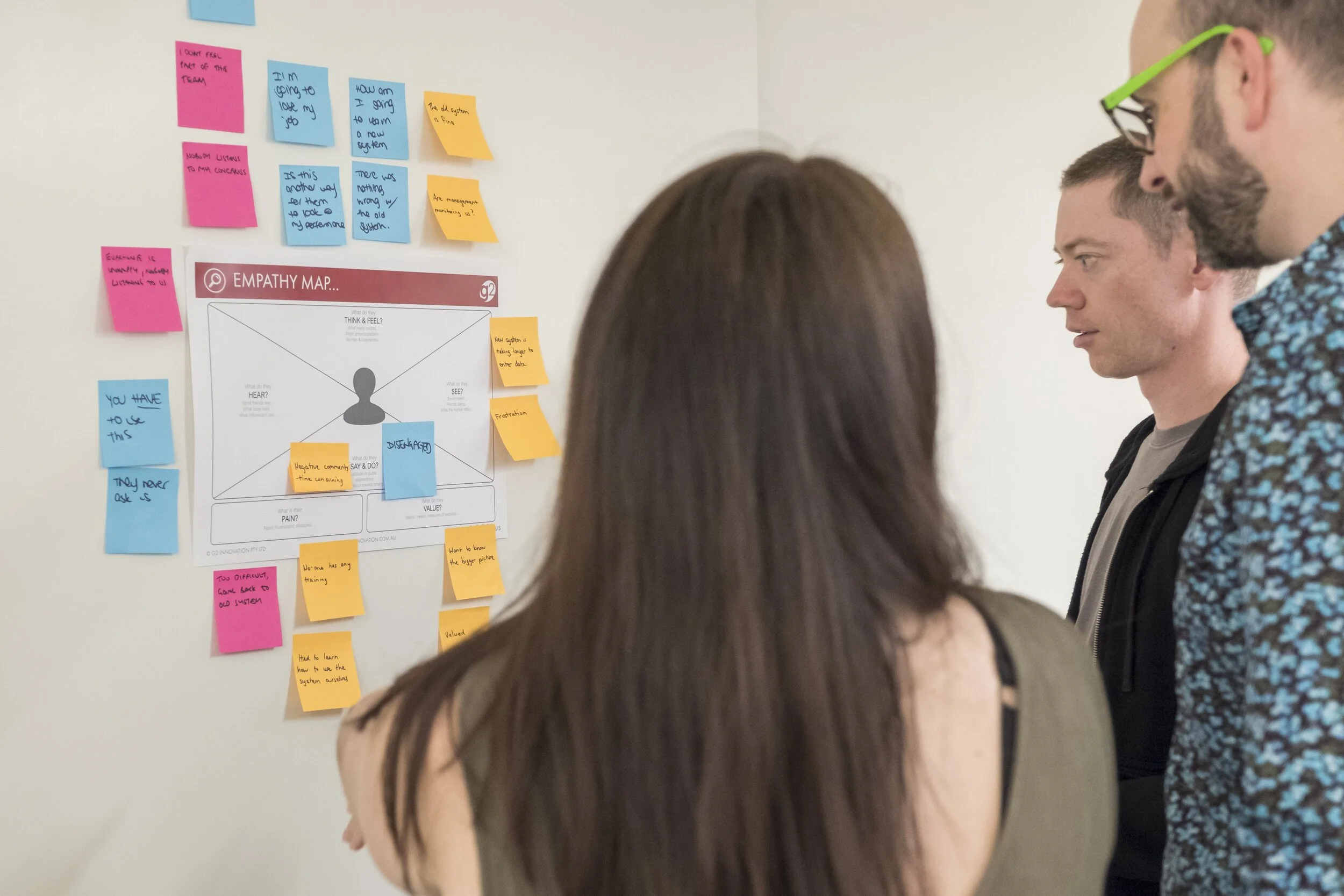
Have you heard of the HPPIR problem? This is when decisions are made based on the Highest Paid Person in the Room. Want to avoid it? Here at G2 Innovation we advocate “you think” before “group think.” Use sticky notes to jot down ideas or thoughts individually and then place them on a wall. As a group you then theme and discuss them with equal weighting (choosing one person to read out the sticky notes helps achieve this neutrality.)
Not only is this way of working fair and useful for bringing to light new thinking, it also helps catch problems before they become insurmountable.
***
Helping teams run effective meetings for greater collaboration and innovation is one of the many things we do at G2 Innovation. If you’d like to learn more, contact us on info@g2innovation.com.au.