Loneliness at work often goes unspoken, but it shapes leadership and team culture. Explore practical steps to address workplace isolation today.
Loneliness at work often goes unspoken, but it shapes leadership and team culture. Explore practical steps to address workplace isolation today.
I have always preferred to assume trust. My starting point is to believe that people mean well, that they intend to honour their word, and that values are lived, not simply laminated on a wall.
Yet every so often, life delivers a lesson. Despite our best hopes, trust does break. Sometimes it’s a single jarring moment, a promise unkept, a silence where there should have been accountability, or a shift from objectivity to personal attack. Other times, it’s a gradual erosion. I once found myself in the middle of this process: some people I trusted stopped doing the things I had quietly assumed of them. Promises faded. Ownership vanished. Difficult conversations were dodged. Communication stalled. It forced me to reconsider not only what trust means, but also what, if anything, can be done to rebuild it once it’s fractured.
This isn’t just my story, of course. Trust breaks in families, in teams, and across entire organisations. The question is universal: When trust is broken, can it be rebuilt, or is leaving the only solution?
I am drawn to a simple formula, articulated by Charles H. Green and Robert M. Galford: trustworthiness plus trusting equals trust. To be trustworthy is to show credibility, to keep confidences, to be reliable, and to act with others’ interests in mind. To trust, meanwhile, is an act of risk, a willingness to believe that people will show up as their best selves.
But the world is rarely tidy. When trustworthiness slips, so does the willingness to trust. Teams become wary, communication grows transactional, and protection of self-reputation, status, identity - takes priority over honest connection.
What do we do when a team or community loses its trustworthiness and, as a result, nobody trusts anyone? Some would argue that a return to trust is almost impossible. Once the contract is broken, the wound lingers.
But research suggests something more nuanced. Trust is not a static commodity. It is, in fact, a living system, subject to both injury and healing. Organisations, much like people, can move from distrust to trust, but it requires more than a new policy, a well-intentioned workshop or even a promise to do better.
1. Name the breach.
It’s tempting to brush past the difficult moments, to move on quickly. But avoidance creates a vacuum, and in that silence, assumptions multiply. Rebuilding starts by naming the rupture and your part in it. This takes courage, and it almost always feels uncomfortable.
2. Create space for story.
As I’ve seen time and again, the stories we tell, especially about failure, are more powerful than those of easy success. Allow people to share what happened, how it felt, and why it matters. This storytelling is not about reliving pain but about creating shared understanding. The most robust cultures, after all, are those that allow for mistakes and seek meaning within them, rather than sweeping them under the rug.
3. Take genuine accountability.
Ownership is the bridge to repair. When mistakes are made, or values are not lived, someone needs to acknowledge it. This is rare, but it’s the spark for genuine healing.
4. Rebuild through small, repeated acts.
Trust doesn’t return because of a grand gesture. It comes back through small, consistent acts of reliability and openness. It’s about doing what you say you’ll do, even when nobody’s watching.
5. Shift from self-protection to advocacy for others.
When trust is low, people hunker down. The real breakthrough happens when individuals take the risk to support others, to advocate for the group, and to put shared goals ahead of personal interests. This is the hardest step, and it’s often where the process stalls.
6. Bring in a facilitator
Often when trust has diminished, seemingly beyond repair, it’s challenging for people to navigate the necessary conversations without the help of a facilitator/coach/mediator. It’s no reflection on your intelligence, emotional or intellectual, to have an outsider join the conversation, but it does allow you to partake in it, potentially in a safer, more productive fashion. You can learn more about how we help guide these conversations here.
The reality is that not every group, team or relationship can recover from a trust breakdown. If safety is breached, if silence prevails, if accountability is continually dodged, or if the culture rewards self-preservation over honesty, sometimes the healthiest response is to leave. Staying in an environment where trust is impossible only compounds the harm. But before choosing that path, I believe it’s worth asking: is this the future you genuinely want, or the future that feels most comfortable right now.
Rebuilding trust is messy, unpredictable, and often humbling. It asks us to let go of protection and risk being disappointed again. Yet, when it works, the trust that emerges is deeper and more resilient than what came before.
The question isn’t whether trust will be broken - it’s inevitable, in some form, for all of us. The real question is whether we can learn to repair, to persist, and, occasionally, to start again elsewhere when repair is no longer possible.
That, perhaps, is the most important trust of all; the trust we place in ourselves to make the right call, whatever it may be.
Want to build trusting teams? Learn more about how to build trust here.
Discover why G2 Innovation is not your run of the mill management consultancy.
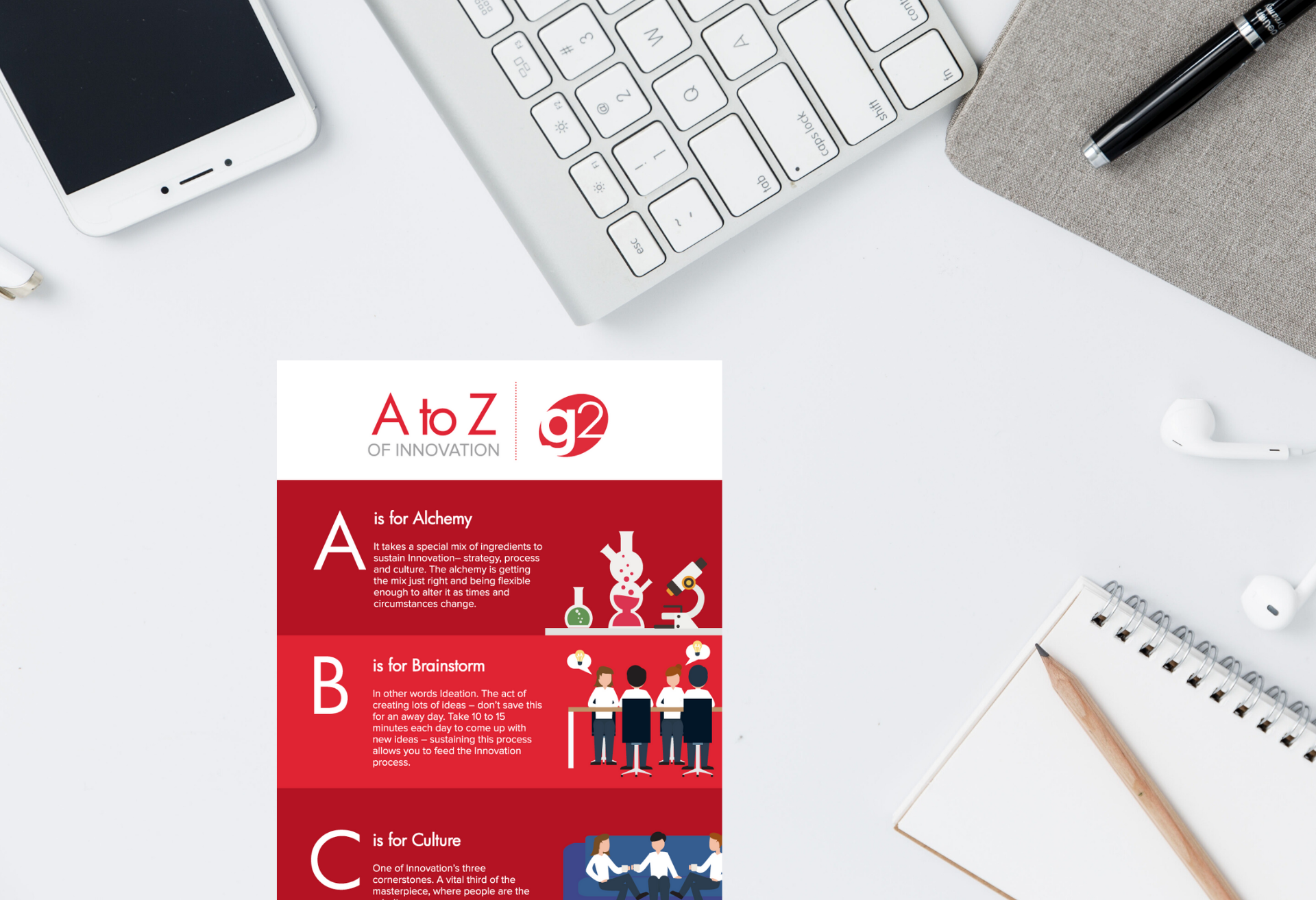
There’s nothing quiet like looking back on something you created over a decade ago, and realising it’s stood the test of time. That’s the case with this infographic, so we thought we’d share it again.
Very few workplaces escaped a multitude of change as a result of Covid-19. So which paradigm shifts should be maintained as we transition back to the workplace? We spoke to HR practitioners about what their ‘new’ old workplace might look like.
Whether virtual, blended or in-person, being able to run effective meetings is essential for reducing silos and increasing innovation. We provide some of our top tips…
We are coming to a cross-roads. To settle into our new daily routine of remote working and wait for ‘normality’ to return or to create more change? Valuable, innovative, exciting change…
Ever heard the catch cry ‘come to me with a solution and not a problem? Here we explore why the opposite should be true…
The Future of Work is here. So why are we using the language of the past, to describe new ways of working?
When it comes to innovating, siloes are one of the biggest challenges for organisations. One way to break down these siloes is by holding cross-functional meetings. But Ugh! Doesn’t everyone hate meetings?
Here’s 5 Ways to Make Your Meetings More Effective.
Customer-centricity is fundamental to the success of any organisation. Many organisations are transforming their ways of working to be more customer-centric, but for teams such as Procurement, Finance, Audit and Compliance the customer can feel far removed from their work, and internal requirements can overshadow the greater purpose.
The Procurement and Systems team of our client, a major healthcare provider faced just this challenge. Here’s how we helped them overcome it.
We speak of ‘the future world of work’ as if it’s a destination we will arrive at one day. But the world of work is dynamic, in constant transition, since time began. Many of the skills to help you thrive are human-centred, skills that can’t be automated by machines. Here’s 8:
People want to work for purpose-led organisations, they want employee experiences that make a difference to them personally, that care for the environment and greater inclusivity. If the world and the way we work is changing that means a redesign of the organisational structure.
We believe that every leader in the 21st century needs to be innovative. In this infographic we share the qualities you need.
As part of the Commonwealth Government’s Innovation Month to celebrate thinking differently, being creative and trying new approaches, they invited organisations to share their stories with the theme: Test, Fail, Lean and Deliver. We couldn’t resist.
Innovation relies heavily on data, experimentation, analysis and iteration. Does this leave a place for gut instinct?
When thinking about innovation, we often think of Google, Uber, the iPod, but these are radical innovations and quite rare. In successful businesses, around 70% of their innovation is incremental - small improvements like software upgrades, new flavours or a grip on the handle. How do organisations stay competitive driving more radical forms of innovation?
According to the Design Management Institute, ‘Every dollar spent on UX brings between $2 and $100 in return and design-centric companies 500 leading industries of US economy by 211%. So, how can Design Thinking save your business money? Here are 4 ways:
We use Design Thinking as the engine for innovation. But, Agile and Lean are also high-rotation words in the innovation space. So, what are they? And what’s the difference?
People tell me that innovation is very IMPORTANT to their organisation. It might be a key strategic pillar or a core value and that is good. But, how URGENT is innovation to your organisation? When I ask people this question, they wonder what the difference is or if it’s a trick question.










![10 Qualities of a Successful Innovation Leader [Infographic]](https://images.squarespace-cdn.com/content/v1/5476dee1e4b017ea6bb1b33a/1570672334092-ZVZ11Q4LOMQY04BYNJ2D/10-Qualities-of-a-successful-innovation-leader_G2-Innovation-compressed-1.png)