Beyond Control: The Quiet Power of Collective Autonomy

Beyond Control: The Quiet Power of Collective Autonomy

When you think of autonomy at work, it’s easy to picture a handful of independent souls -those who take initiative and are trusted to “just get on with it.” But genuine growth in any business doesn’t come from lone wolves; it’s built on something deeper: collective autonomy.

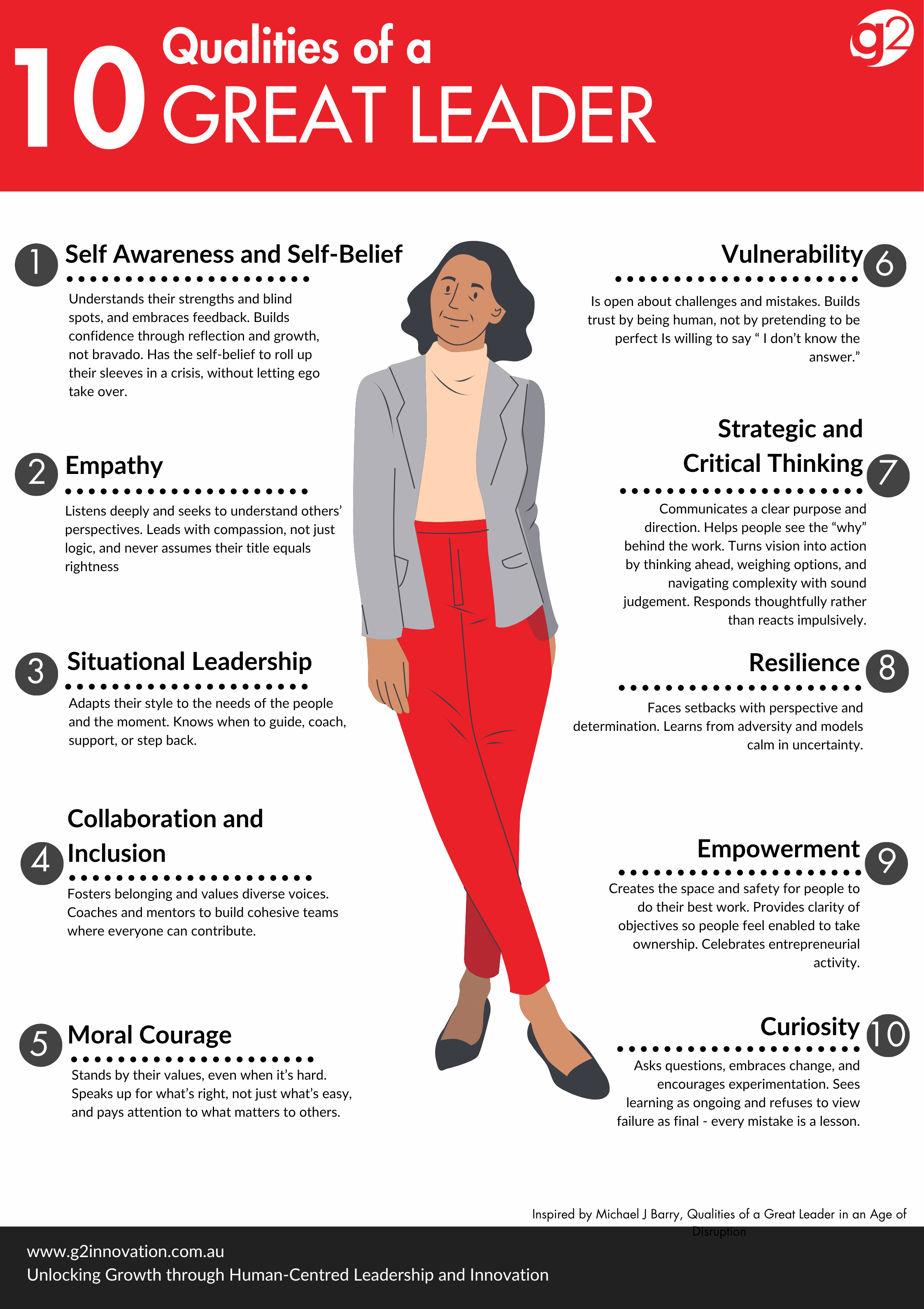
What Great Leadership Looks Like Today: The 10 Essential Qualities

What Great Leadership Looks Like Today: The 10 Essential Qualities

What Great Leadership Looks Like Today: The 10 Essential Qualities

Leadership is not a fixed state.

It is a practice, one that demands as much of our inner world as our outward actions. In today’s turbulent and unpredictable environment, the qualities of a great leader are less about technical know-how and more about who you are, how you show up, and how you help others find their own footing.

Having worked with leaders at every level, through crises, restructures, missed opportunities, and those rare days when everything comes together - what stands out isn’t charisma or heroics. It’s the everyday choices. It’s the willingness to be seen, to listen, to change course, and sometimes, to get out of the way.

Below, I offer my own take on what makes a truly great leader. These are not boxes to be ticked, nor are they reserved for those with certain titles or a corner office. They are qualities to be practised, grown, and refined over a lifetime.

A Personal Reflection: When Leadership is Tested

A while ago, I found myself facing disappointment on two fronts in the space of a week. At the start of the weekmy daughter felt the sting of being rejected for a coveted role at school; by Friday, my team and I narrowly missed out on a significant tender opportunity. I won’t pretend - both hurt.

My daughter’s reaction was beautifully raw and honest. She had a good cry, spent the evening wallowing, and confessed her biggest fear: what would other people think? By morning, she had gathered herself and told me, quite matter-of-factly, “Everyone gets more no’s than yes’s in life,” before setting her sights on the next challenge.

As for myself, I found comfort in sharing my feelings with a trusted colleague, took a walk to clear my mind, and, after a moment of throwing my own “teddies out of the pram,” shifted into a mindset of learning and growth. Reflecting on these moments, I realised they encapsulate so many of the qualities I see in great leadership: resilience, vulnerability, self-awareness, and the willingness to move forward, not in denial of disappointment, but because of what we’ve learned from it.

The 10 Qualities of a Great Leader

Self-Awareness & Self-Belief

The best leaders know themselves. They are honest about their strengths and weaknesses and welcome feedback as an opportunity for growth rather than a threat to their authority. True self-belief is not loud or showy; it’s grounded in reflection and the quiet confidence to roll up your sleeves in a crisis, without ego taking over. In moments of uncertainty, this kind of self-awareness allows leaders to step in when needed, and to step back when others are better placed to act.

Vulnerability

It takes strength to be vulnerable, especially in a world that often prizes certainty and bravado. Great leaders share their challenges and mistakes openly, making it safe for others to do the same. Vulnerability is not about oversharing or seeking sympathy; it’s about demonstrating that you’re human, and in doing so, building trust across your team.

Download your copy of the Infographic

Situational Leadership

There is no one-size-fits-all approach. The ability to adapt - to flex your style according to the needs of your people and the moment - is the hallmark of effective leadership. Sometimes it means guiding with a steady hand; sometimes it means coaching, supporting, or simply getting out of the way. Great leaders read the room and adjust their approach, recognising that what got them here may not get them there.

Empathy

True empathy goes beyond listening to the words. It’s about seeking to understand others’ perspectives and leading with compassion as well as logic. The best leaders never assume that their title equates to rightness. They foster a culture where everyone’s voice matters and where decisions are made with people, not just processes, in mind.

Curiosity & Learning Mindset

If you want to grow a resilient, innovative organisation, curiosity is non-negotiable. Leaders who ask questions, embrace change, and encourage experimentation are the ones who adapt and thrive. Crucially, they reject the notion of failure as a dead end. Instead, mistakes become lessons, an ongoing opportunity to learn and improve.

Strategic & Critical Thinking

Setting a clear direction is only half the battle. Great leaders translate vision into action by thinking ahead, weighing options, and navigating complexity with sound judgement. They bring clarity to the chaos, help people understand the “why” behind the work, and make decisions that are responsive, not simply reactive.

Resilience

Setbacks are inevitable, but how you respond makes all the difference. Resilient leaders face adversity with perspective and determination. They model calm when others are rattled and demonstrate that setbacks are not endpoints, but opportunities to regroup and try again.

Empowerment

Empowering others isn’t just about delegation. It’s about creating the space and safety for people to do their best work, providing clarity of objectives, and then trusting them to deliver. Great leaders celebrate entrepreneurial spirit and encourage ownership at every level, knowing that people thrive when given both freedom and responsibility.

Moral Courage

Standing by your values is never easy, particularly when the stakes are high. Leaders with moral courage speak up for what’s right, not just what’s easy. They listen deeply to what matters to others and are willing to take a stand, even when it means facing discomfort or opposition. In doing so, they set the tone for integrity throughout the organisation.

Collaboration & Inclusion

No leader succeeds alone. The strongest organisations are built on a foundation of collaboration and inclusion. Great leaders foster belonging, value diverse perspectives, and act as coaches and mentors to build cohesive teams. When everyone is encouraged to contribute, the collective intelligence of the organisation rises.

In summary:


Great leadership is not about having all the answers, or always getting it right. It’s about staying open, resilient, and focused on the growth of yourself, your people, and your purpose. These qualities are not innate gifts; they are choices, made moment by moment, that over time shape the culture and direction of your team.

As the world shifts, so must we. The best leaders are those who never stop learning, who can balance clarity with curiosity, and who lead with both courage and care. If you’re working on even half of these qualities, you’re on the right track.

Want to boost your team’s leadership skills? Our Leadership Programs could be the answer.


Why Ambition Still Matters in Business (and How to Nurture It in Your Organisation)

Why Ambition Still Matters in Business (and How to Nurture It in Your Organisation)

Why Ambition Still Matters in Business (and How to Nurture It in Your OrganiSation)

Key Takeaways: Why Ambition Remains Vital in Business

  • Ambition fuels vision and purpose at every level

  • Smart risk-taking drives innovation and growth

  • Perseverance turns setbacks into opportunities

  • Empowerment and care build high-performing teams

  • Passion and optimism are contagious

In a world that celebrates humility, ambition has become, in some circles, a dirty word - something to hide for fear of appearing arrogant or self-serving. But humble and ambitious are not mutually exclusive. In fact, the most resilient businesses I’ve seen, whether global players or local start-ups, tend to strike the balance between restless ambition and the humility to learn, adapt, and admit when they’ve got it wrong.

It’s those organisations that aren’t content with “good enough,” yet are open enough to feedback and challenge, that come closest to future-proofing themselves. And every one of them has ambition woven through, at every level.

So, what does ambition actually look like in practice? It’s not just chasing growth for growth’s sake. Ambition is a nuanced blend of vision, courage, resilience, empowerment, care for people, and that ineffable spark, energy and optimism that sets remarkable businesses apart.

Here’s why ambition still matters for success, and how to nurture it in your organisation.

1. Ambition Starts with a Clear, Shared Vision

Ambition begins with clarity of vision. A compelling statement in a slide deck isn’t enough; the vision must feel real and relevant to everyone in the business. When people can see themselves in the story - when they feel personally invested in the outcome - ambition takes root and grows.

This isn’t about compliance with targets; it’s about a shared sense of purpose. Teams with real ambition ask, “How can we make this vision matter, not just for the business, but for ourselves and our customers?” When that happens, extraordinary results follow.

2. Ambitious Businesses Take Smart Risks

No ambitious business gets far without a healthy appetite for risk. But risk-taking isn’t recklessness—it’s curiosity, coupled with the courage to explore possibilities. Businesses content with the status quo are inevitably overtaken by those willing to reframe problems and try something different, even when it feels uncomfortable.

What holds people back? Often, it’s those “ugly comfy jumpers”; the limiting beliefs that tell us to play it safe. We know them well, and they keep us comfortable, but rarely do they serve us. The most ambitious organisations help people shed those jumpers, creating environments where experimentation is not just tolerated, but expected.

3. Perseverance Turns Setbacks Into Success

Ambition is tested in adversity, not in ease. Every setback, every “no,” every near-miss, is an invitation to grow. The most ambitious businesses, and the people within them, are those who find meaning in setbacks. They reflect, adapt, and persist, seeing each challenge as a necessary chapter in a broader story.

Perseverance is both an organisational and personal discipline. It’s about building the “opportunity mindset”- the ability to pause, breathe, and look for the silver lining, even when it’s not immediately obvious.

4. Empowerment, Safety, and Clarity Drive Ambition

Ambition needs more than passion; it demands an environment where people are empowered to act. That means psychological safety, space to speak up, experiment, and admit mistakes, paired with absolute clarity about expectations and purpose.

Without this foundation, ambition fizzles out. With it, you unlock everyday ingenuity. People feel trusted, supported, and responsible. That’s when ambition turns into genuine high performance.

5. Genuine Care for Your People

Plenty of businesses have jumped on the “culture” bandwagon, providing perks in exchange for discretionary effort. But in an ambitious organisation, care is not a transaction - it’s a given. There are leaders who believe it’s acceptable to threaten their highest earners because “they’re paid enough to have should have thick skin.” That isn’t how you build ambition. Sustainable ambition is never driven by fear; it’s rooted in respect, in honest conversations, and in genuine care for the people doing the work.

6. Passion, Energy, and Optimism

Finally, ambition is infectious. It’s visible in the energy people bring to work, in the optimism that fuels perseverance, and in the passion that turns the ordinary into the exceptional. This isn’t cheerleading for its own sake. It’s about creating a place where people want to give their best, where the pursuit of the vision feels worthwhile - sometimes even exhilarating. The best leaders model this; they show up energised and engaged, not mired in complaint.

Organisations that prioritise these qualities outperform those that don’t. Not because they never fail, but because they refuse to settle for mediocrity.

How Leaders Can Reignite Ambition

As Amer Kaissi says in the Harvard Business Review Podcast on how great leaders balance humility with ambition, “humility keeps our feet on the ground by allowing us to have an accurate assessment of our own abilities, by understanding our strengths and our weaknesses.” And “ambition is about making us reach for the stars by believing in our own greatness, but also in the greatness of the people who work with us.”

Ambition doesn’t thrive by accident. It’s built, nurtured, and protected by leaders willing to set a bold direction, create space for risk and learning, and show up with authenticity. If your business feels stuck, caught between what is and what could be, it might be time to reignite ambition.

Ask yourself:

Does our vision matter deeply, to me and to my people?
Are we empowering risk, learning from setbacks, and fuelling each other’s optimism?

If not, start there. In a world addicted to quick fixes, sustained ambition remains one of the few true differentiators.

Want more tips on business growth and leadership? Subscribe to our newsletter for regular insights!

Rebuilding Trust When It’s Been Broken

Rebuilding Trust When It’s Been Broken

I have always preferred to assume trust. My starting point is to believe that people mean well, that they intend to honour their word, and that values are lived, not simply laminated on a wall.

Yet every so often, life delivers a lesson. Despite our best hopes, trust does break. Sometimes it’s a single jarring moment, a promise unkept, a silence where there should have been accountability, or a shift from objectivity to personal attack. Other times, it’s a gradual erosion. I once found myself in the middle of this process: some people I trusted stopped doing the things I had quietly assumed of them. Promises faded. Ownership vanished. Difficult conversations were dodged. Communication stalled. It forced me to reconsider not only what trust means, but also what, if anything, can be done to rebuild it once it’s fractured.

This isn’t just my story, of course. Trust breaks in families, in teams, and across entire organisations. The question is universal: When trust is broken, can it be rebuilt, or is leaving the only solution?

Trust: A Simple Formula, Complex in Practice

I am drawn to a simple formula, articulated by Charles H. Green and Robert M. Galford: trustworthiness plus trusting equals trust. To be trustworthy is to show credibility, to keep confidences, to be reliable, and to act with others’ interests in mind. To trust, meanwhile, is an act of risk, a willingness to believe that people will show up as their best selves.

But the world is rarely tidy. When trustworthiness slips, so does the willingness to trust. Teams become wary, communication grows transactional, and protection of self-reputation, status, identity - takes priority over honest connection.

What Happens When None of That Happens?

What do we do when a team or community loses its trustworthiness and, as a result, nobody trusts anyone? Some would argue that a return to trust is almost impossible. Once the contract is broken, the wound lingers.

But research suggests something more nuanced. Trust is not a static commodity. It is, in fact, a living system, subject to both injury and healing. Organisations, much like people, can move from distrust to trust, but it requires more than a new policy, a well-intentioned workshop or even a promise to do better.

The Ingredients of Rebuilding

1. Name the breach.
It’s tempting to brush past the difficult moments, to move on quickly. But avoidance creates a vacuum, and in that silence, assumptions multiply. Rebuilding starts by naming the rupture and your part in it. This takes courage, and it almost always feels uncomfortable.

2. Create space for story.
As I’ve seen time and again, the stories we tell, especially about failure, are more powerful than those of easy success. Allow people to share what happened, how it felt, and why it matters. This storytelling is not about reliving pain but about creating shared understanding. The most robust cultures, after all, are those that allow for mistakes and seek meaning within them, rather than sweeping them under the rug.

3. Take genuine accountability.
Ownership is the bridge to repair. When mistakes are made, or values are not lived, someone needs to acknowledge it. This is rare, but it’s the spark for genuine healing.

4. Rebuild through small, repeated acts.
Trust doesn’t return because of a grand gesture. It comes back through small, consistent acts of reliability and openness. It’s about doing what you say you’ll do, even when nobody’s watching.

5. Shift from self-protection to advocacy for others.
When trust is low, people hunker down. The real breakthrough happens when individuals take the risk to support others, to advocate for the group, and to put shared goals ahead of personal interests. This is the hardest step, and it’s often where the process stalls.

6. Bring in a facilitator
Often when trust has diminished, seemingly beyond repair, it’s challenging for people to navigate the necessary conversations without the help of a facilitator/coach/mediator. It’s no reflection on your intelligence, emotional or intellectual, to have an outsider join the conversation, but it does allow you to partake in it, potentially in a safer, more productive fashion. You can learn more about how we help guide these conversations here.

When Is It Time to Walk Away?

The reality is that not every group, team or relationship can recover from a trust breakdown. If safety is breached, if silence prevails, if accountability is continually dodged, or if the culture rewards self-preservation over honesty, sometimes the healthiest response is to leave. Staying in an environment where trust is impossible only compounds the harm. But before choosing that path, I believe it’s worth asking: is this the future you genuinely want, or the future that feels most comfortable right now.

A Final Word

Rebuilding trust is messy, unpredictable, and often humbling. It asks us to let go of protection and risk being disappointed again. Yet, when it works, the trust that emerges is deeper and more resilient than what came before.

The question isn’t whether trust will be broken - it’s inevitable, in some form, for all of us. The real question is whether we can learn to repair, to persist, and, occasionally, to start again elsewhere when repair is no longer possible.

That, perhaps, is the most important trust of all; the trust we place in ourselves to make the right call, whatever it may be.

Want to build trusting teams? Learn more about how to build trust here.

The A to Z of Innovation

The A to Z of Innovation

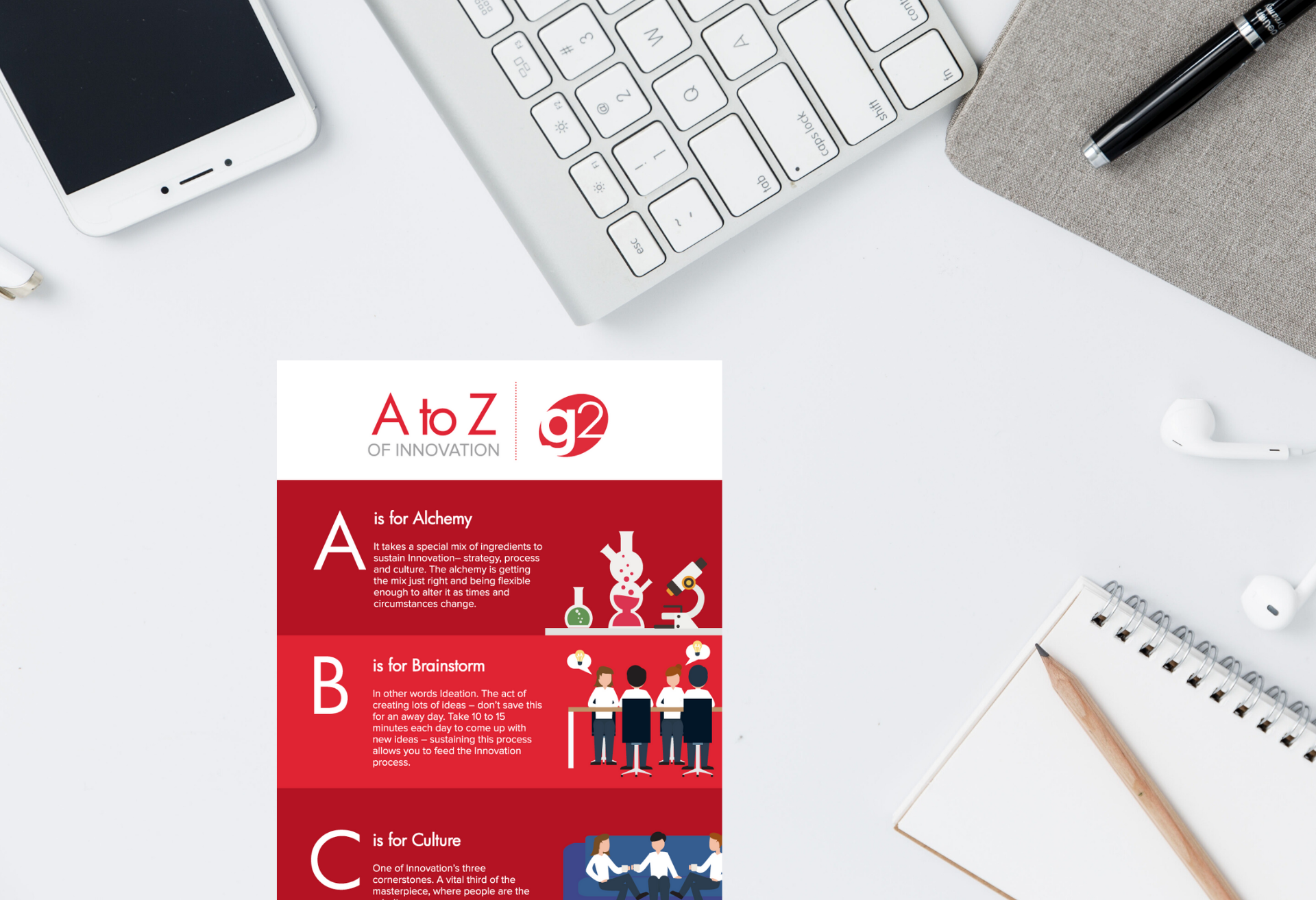
There’s nothing quiet like looking back on something you created over a decade ago, and realising it’s stood the test of time. That’s the case with this infographic, so we thought we’d share it again.

Breaking workplace paradigms

Breaking workplace paradigms

Very few workplaces escaped a multitude of change as a result of Covid-19. So which paradigm shifts should be maintained as we transition back to the workplace? We spoke to HR practitioners about what their ‘new’ old workplace might look like.

Running effective virtual meetings

Running effective virtual meetings

Whether virtual, blended or in-person, being able to run effective meetings is essential for reducing silos and increasing innovation. We provide some of our top tips…

What happens now?

What happens now?

We are coming to a cross-roads. To settle into our new daily routine of remote working and wait for ‘normality’ to return or to create more change? Valuable, innovative, exciting change…

Data, Discovery and Ideation...

Data, Discovery and Ideation...

Ever heard the catch cry ‘come to me with a solution and not a problem? Here we explore why the opposite should be true…

Five ways to have more effective meetings

Five ways to have more effective meetings

When it comes to innovating, siloes are one of the biggest challenges for organisations. One way to break down these siloes is by holding cross-functional meetings. But Ugh! Doesn’t everyone hate meetings?

Here’s 5 Ways to Make Your Meetings More Effective.

Developing New Ways of Working in Traditional Teams

Developing New Ways of Working in Traditional Teams

Customer-centricity is fundamental to the success of any organisation. Many organisations are transforming their ways of working to be more customer-centric, but for teams such as Procurement, Finance, Audit and Compliance the customer can feel far removed from their work, and internal requirements can overshadow the greater purpose.

The Procurement and Systems team of our client, a major healthcare provider faced just this challenge. Here’s how we helped them overcome it.

8 Skills to Help you Thrive in the Future of Work

8 Skills to Help you Thrive in the Future of Work

We speak of ‘the future world of work’ as if it’s a destination we will arrive at one day. But the world of work is dynamic, in constant transition, since time began. Many of the skills to help you thrive are human-centred, skills that can’t be automated by machines. Here’s 8:

3 Organisational Structures for the Future of Work

3 Organisational Structures for the Future of Work

People want to work for purpose-led organisations, they want employee experiences that make a difference to them personally, that care for the environment and greater inclusivity. If the world and the way we work is changing that means a redesign of the organisational structure.

Are our systems too rigid for innovation?

Are our systems too rigid for innovation?

Systems are supposed to be dynamic and organic, changing with the needs of the people within them. The world is moving at a rapid rate, but can that be said of some of the systems humans have built? Is it just me, or do these systems seem more rigid than dynamic?

Test, Fail, Learn and Deliver

Test, Fail, Learn and Deliver

As part of the Commonwealth Government’s Innovation Month to celebrate thinking differently, being creative and trying new approaches, they invited organisations to share their stories with the theme: Test, Fail, Lean and Deliver. We couldn’t resist.

Member Login
Welcome, (First Name)!

Forgot? Show
Log In
Enter Member Area
My Profile Log Out